
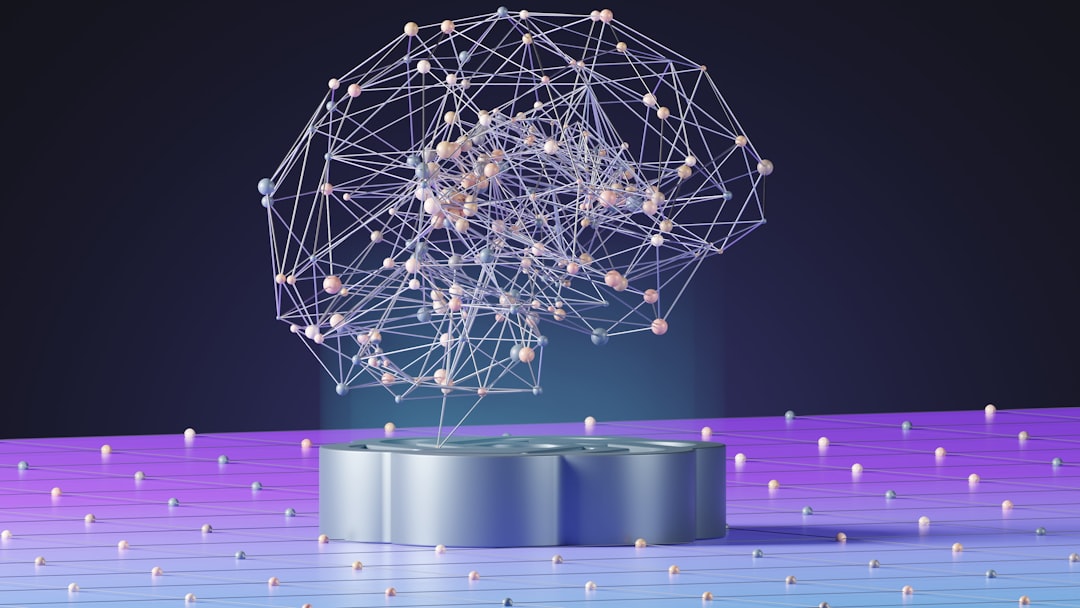
Deep learning, a subset of machine learning, has emerged as a transformative force in the realm of artificial intelligence (AI). It is characterised by its ability to learn from vast amounts of data through the use of neural networks, which are inspired by the human brain’s architecture. This technology has gained significant traction in recent years, driven by advancements in computational power, the availability of large datasets, and innovative algorithms.
As a result, deep learning has become a cornerstone of modern AI applications, enabling machines to perform tasks that were once thought to be the exclusive domain of humans. The significance of deep learning extends beyond mere technological advancement; it has the potential to revolutionise various industries, from healthcare to finance, and even entertainment. By mimicking the way humans learn and process information, deep learning systems can identify patterns and make predictions with remarkable accuracy.
This article aims to provide a comprehensive overview of deep learning, exploring its foundational concepts, historical evolution, practical applications, inherent challenges, and future prospects. Have you read the latest blog post on artificial intelligence?
Summary
- Deep learning is a subset of machine learning that uses neural networks to mimic the way the human brain processes information.
- Neural networks are composed of interconnected nodes that work together to process and analyse complex data.
- Deep learning has evolved significantly over the years, with advancements in hardware and algorithms driving its growth.
- Deep learning has a wide range of applications, including image and speech recognition, natural language processing, and autonomous vehicles.
- Despite its potential, deep learning faces challenges such as data privacy, bias, and the need for large amounts of labelled data.
Understanding Neural Networks
At the heart of deep learning lies the concept of neural networks. These computational models consist of interconnected nodes or “neurons” that work together to process information. Each neuron receives input data, applies a mathematical transformation, and passes the output to subsequent layers of neurons.
The architecture of a neural network typically comprises an input layer, one or more hidden layers, and an output layer. The depth of the network—referring to the number of hidden layers—plays a crucial role in its ability to learn complex representations of data. Neural networks operate through a process known as training, where they adjust their internal parameters based on the data they encounter.
This is achieved through a technique called backpropagation, which calculates the gradient of the loss function with respect to each weight by the chain rule, allowing the model to update its weights in a manner that minimises prediction errors. The training process requires substantial computational resources and time, particularly for deep networks with numerous layers. However, once trained, these models can generalise well to new data, making them highly effective for various tasks such as image recognition, natural language processing, and more.
Evolution of Deep Learning

The journey of deep learning can be traced back several decades, with its roots embedded in early neural network research during the 1950s and 1960s. Initial models were simplistic and limited in their capabilities, often struggling with complex tasks due to insufficient computational power and limited datasets. However, the landscape began to shift in the 1980s with the introduction of backpropagation, which allowed for more effective training of multi-layer networks.
Despite these advancements, deep learning remained relatively obscure until the late 2000s. The resurgence of deep learning can be attributed to several key factors. The exponential growth of data generated by digital technologies provided a rich resource for training models.
Concurrently, advancements in graphics processing units (GPUs) enabled faster computations, making it feasible to train deeper networks. Landmark achievements in 2012, such as AlexNet’s victory in the ImageNet competition, showcased the potential of deep learning in computer vision and sparked widespread interest across various fields. This pivotal moment marked the beginning of a new era where deep learning became synonymous with cutting-edge AI research and applications.
Applications of Deep Learning
| Application | Metrics |
|---|---|
| Image Recognition | Accuracy, Precision, Recall |
| Natural Language Processing | Perplexity, BLEU score, F1 score |
| Speech Recognition | Word Error Rate, Phoneme Error Rate |
| Medical Diagnosis | Sensitivity, Specificity, AUC-ROC |
| Autonomous Vehicles | Object detection accuracy, Collision avoidance rate |
Deep learning has found applications across a multitude of domains, demonstrating its versatility and effectiveness. In healthcare, for instance, deep learning algorithms are employed for medical image analysis, enabling radiologists to detect anomalies such as tumours with greater accuracy than traditional methods. These systems can analyse thousands of images rapidly, assisting healthcare professionals in making timely diagnoses and treatment decisions.
In addition to healthcare, deep learning has made significant strides in natural language processing (NLP). Technologies such as chatbots and virtual assistants leverage deep learning models to understand and generate human language. These applications have transformed customer service experiences and enabled more intuitive human-computer interactions.
Furthermore, deep learning is instrumental in recommendation systems used by platforms like Netflix and Amazon, where it analyses user behaviour to suggest content tailored to individual preferences.
Challenges and Limitations of Deep Learning
Despite its remarkable capabilities, deep learning is not without challenges and limitations. One significant concern is the requirement for large amounts of labelled data for training purposes. Acquiring and annotating such datasets can be time-consuming and expensive, particularly in specialised fields like medicine or autonomous driving.
Moreover, deep learning models are often perceived as “black boxes,” making it difficult for practitioners to interpret their decision-making processes. This lack of transparency raises concerns about accountability and trust in AI systems. Another challenge lies in the computational resources needed for training deep learning models.
The energy consumption associated with training large networks has sparked discussions about sustainability within the AI community. Additionally, overfitting remains a persistent issue; when models become too complex relative to the amount of training data available, they may perform well on training data but fail to generalise effectively to unseen data. Addressing these challenges is crucial for advancing deep learning technologies while ensuring their responsible deployment.
Beyond Neural Networks: Exploring other Deep Learning Techniques

While neural networks are the most prominent aspect of deep learning, there are several other techniques that contribute to this field’s richness and diversity. One such technique is convolutional neural networks (CNNs), which are particularly effective for image processing tasks. CNNs utilise convolutional layers that apply filters to input images, allowing them to capture spatial hierarchies and patterns effectively.
This architecture has led to breakthroughs in areas such as facial recognition and object detection. Another noteworthy approach is recurrent neural networks (RNNs), which are designed for sequential data processing. RNNs excel in tasks involving time series or natural language due to their ability to maintain memory across sequences.
Variants like long short-term memory (LSTM) networks have further enhanced RNN capabilities by addressing issues related to vanishing gradients during training. These diverse techniques illustrate that deep learning encompasses a broad spectrum of methodologies beyond traditional feedforward neural networks.
The Future of Deep Learning
Looking ahead, the future of deep learning appears promising yet complex. As research continues to advance, we can expect improvements in model efficiency and interpretability. Techniques such as transfer learning—where pre-trained models are adapted for new tasks—are likely to gain traction, enabling practitioners to leverage existing knowledge while reducing data requirements.
Additionally, ongoing developments in unsupervised and semi-supervised learning may alleviate some challenges associated with data scarcity. Moreover, as industries increasingly adopt deep learning technologies, ethical considerations will play a pivotal role in shaping their deployment. Ensuring fairness, accountability, and transparency will be paramount as organisations seek to harness the power of AI responsibly.
The integration of deep learning into everyday applications will necessitate collaboration between technologists, ethicists, and policymakers to navigate potential societal impacts effectively.
Ethical Considerations in Deep Learning
The rapid proliferation of deep learning technologies raises important ethical considerations that must be addressed proactively. One major concern is bias in AI systems; if training data reflects societal prejudices or inequalities, models may perpetuate or even exacerbate these issues when deployed in real-world scenarios. Ensuring diverse and representative datasets is essential for mitigating bias and promoting fairness in AI applications.
Furthermore, privacy concerns are paramount as deep learning systems often rely on vast amounts of personal data for training purposes. Striking a balance between utilising data for model improvement while safeguarding individual privacy rights is a critical challenge facing researchers and practitioners alike. Additionally, accountability mechanisms must be established to ensure that decisions made by AI systems can be traced back and understood by humans.
In conclusion, while deep learning holds immense potential for innovation across various sectors, it is imperative that ethical considerations guide its development and implementation. By fostering a culture of responsibility within the AI community, we can harness the benefits of deep learning while minimising its risks and ensuring that technology serves humanity’s best interests.
If you are interested in delving deeper into the world of technology and digital marketing, you may find this article on marketing yourself as a freelancer to be a valuable resource. Understanding how to effectively promote your skills and services in a competitive market can be crucial for success in the freelance industry. Additionally, for those intrigued by the concept of non-fungible tokens (NFTs) and their potential impact on the digital economy, this article on eBay strengthening its NFT business with KnownOrigin may provide further insight. Exploring various aspects of technology and online platforms, such as Snapchat Web for PC, can also broaden your understanding of digital tools and their applications. Check out this article on Snapchat Web for PC to learn more about this innovative feature.
FAQs
What is deep learning?
Deep learning is a subset of machine learning, which uses artificial neural networks to model and understand complex patterns in data. It is inspired by the structure and function of the human brain, and is capable of learning from large amounts of unstructured data.
What are neural networks?
Neural networks are a key component of deep learning, and are composed of interconnected nodes, or “neurons”, which process and transmit information. They are organised in layers, with an input layer, one or more hidden layers, and an output layer.
How do neural networks learn?
Neural networks learn through a process called backpropagation, where the network adjusts the strength of connections between neurons based on the error in its predictions. This allows the network to improve its performance over time.
What are some applications of deep learning?
Deep learning has a wide range of applications, including image and speech recognition, natural language processing, autonomous vehicles, and medical diagnosis. It is also used in recommendation systems, financial forecasting, and many other fields.
What are some challenges of deep learning?
Challenges of deep learning include the need for large amounts of labelled data, the complexity of neural network architectures, and the computational resources required for training and inference. Additionally, deep learning models can be difficult to interpret and may suffer from biases in the data.
What is the future of deep learning?
The future of deep learning is likely to involve advancements in model interpretability, transfer learning, and the development of more efficient and scalable algorithms. It is also expected to play a key role in the development of artificial general intelligence and the automation of various tasks across industries.


. It is characterised..)