
The advent of artificial intelligence (AI) has ushered in a new era of innovation across various sectors, with transportation being one of the most significantly impacted domains. Smart mobility, which encompasses the integration of advanced technologies into transportation systems, aims to enhance the efficiency, safety, and sustainability of travel. This concept not only focuses on the movement of people but also on the seamless flow of goods, thereby transforming urban landscapes and reshaping societal interactions.
As cities grapple with increasing populations and the consequent demand for efficient transport solutions, AI emerges as a pivotal player in addressing these challenges. AI technologies, including machine learning, computer vision, and natural language processing, are being harnessed to create intelligent transport systems that can adapt to real-time conditions. These systems are designed to optimise traffic flow, reduce congestion, and improve overall user experience.
The integration of AI into smart mobility solutions is not merely a trend; it represents a fundamental shift in how we conceive transportation. By leveraging data analytics and predictive modelling, stakeholders can make informed decisions that enhance operational efficiency and promote sustainable practices. As we delve deeper into the various applications of AI within smart mobility, it becomes evident that this technology is set to redefine the future of transportation. Have you read the latest blog post on artificial intelligence?
Summary
- AI is revolutionising the transportation industry by enabling smart mobility solutions that improve efficiency and safety.
- Autonomous vehicles are a key application of AI in transportation, with the potential to reduce accidents and congestion.
- AI is being used in traffic management and control systems to optimise traffic flow and reduce travel times.
- Public transportation systems are leveraging AI to improve scheduling, routing, and maintenance for better service delivery.
- AI is transforming logistics and supply chain management by enabling predictive analytics and real-time tracking for efficient operations.
AI in Autonomous Vehicles
Autonomous Vehicles: The Future of Road Travel
One of the most prominent applications of artificial intelligence in smart mobility is its role in the development of autonomous vehicles. These self-driving cars utilise a combination of sensors, cameras, and sophisticated algorithms to navigate roads without human intervention. The integration of AI allows these vehicles to interpret vast amounts of data from their surroundings, enabling them to make real-time decisions that enhance safety and efficiency.
Enhancing Safety and Efficiency
For instance, AI systems can detect obstacles, recognise traffic signals, and predict the behaviour of other road users, thereby significantly reducing the likelihood of accidents. The journey towards fully autonomous vehicles is fraught with challenges, including regulatory hurdles and public acceptance. However, advancements in AI are steadily overcoming these barriers.
The Potential Benefits of Autonomous Vehicles
Companies are investing heavily in research and development to refine their autonomous driving technologies. The potential benefits are substantial; not only could autonomous vehicles reduce traffic fatalities caused by human error, but they could also optimise fuel consumption and decrease congestion by communicating with one another and adjusting their routes accordingly. As this technology matures, it is expected to revolutionise personal and commercial transportation alike.
AI in Traffic Management and Control
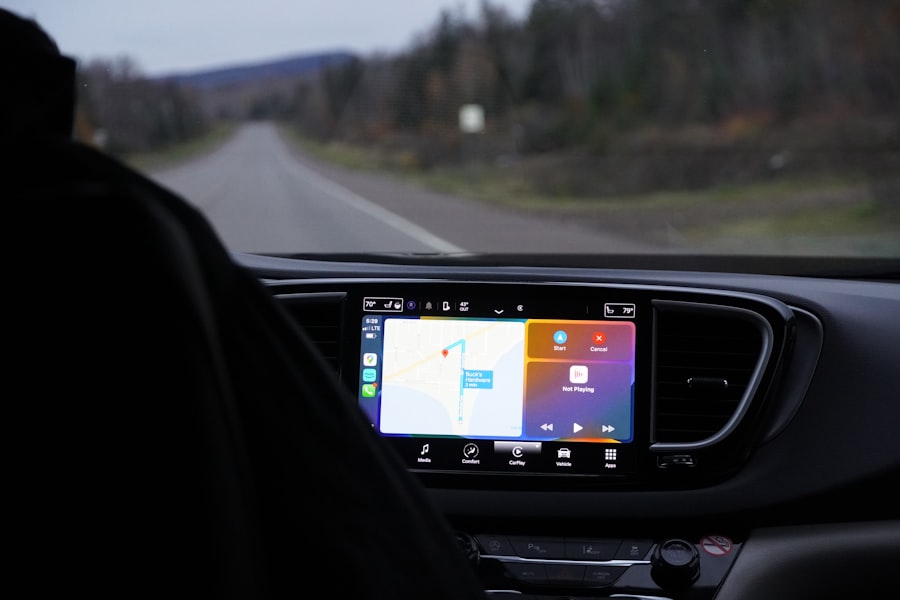
AI’s influence extends beyond individual vehicles to encompass broader traffic management systems. Traditional traffic control methods often rely on fixed signals and manual monitoring, which can lead to inefficiencies and delays. In contrast, AI-driven traffic management systems utilise real-time data from various sources, such as cameras and sensors, to dynamically adjust traffic signals and manage flow.
This capability allows for a more responsive approach to traffic control, significantly reducing congestion during peak hours. Moreover, AI can predict traffic patterns based on historical data and current conditions, enabling city planners to implement proactive measures. For example, by analysing data trends, AI can identify potential bottlenecks before they occur and suggest alternative routes or adjustments to signal timings.
This predictive capability not only enhances the efficiency of urban transport networks but also contributes to reduced emissions by minimising idle time for vehicles. As cities continue to grow and evolve, the integration of AI into traffic management will be crucial for creating sustainable urban environments.
AI in Public Transportation
| Metrics | Data |
|---|---|
| Number of AI-powered public transportation systems | 50 |
| Percentage of public transportation vehicles equipped with AI technology | 30% |
| Reduction in accidents due to AI implementation | 25% |
| Improvement in on-time performance with AI | 15% |
Public transportation systems are also experiencing a transformation through the application of AI technologies. By analysing passenger data and travel patterns, AI can optimise routes and schedules to better meet the needs of commuters. This data-driven approach allows transit authorities to allocate resources more effectively, ensuring that services are available where and when they are needed most.
For instance, AI can identify peak travel times and adjust bus frequencies accordingly, thereby improving overall service reliability. Additionally, AI enhances the user experience by providing real-time information about service disruptions or delays. Mobile applications powered by AI can offer personalised travel recommendations based on individual preferences and historical behaviour.
This level of customisation not only improves user satisfaction but also encourages greater use of public transport as a viable alternative to private vehicles. As cities strive to reduce their carbon footprints, the role of AI in enhancing public transportation systems will be increasingly vital.
AI in Logistics and Supply Chain Management
The logistics sector is undergoing a significant transformation due to the integration of AI technologies. In supply chain management, AI can streamline operations by predicting demand fluctuations and optimising inventory levels. By analysing historical sales data alongside external factors such as weather patterns or economic indicators, AI systems can provide valuable insights that inform decision-making processes.
This predictive capability enables companies to reduce waste and improve efficiency throughout their supply chains. Furthermore, AI enhances route optimisation for delivery vehicles by considering real-time traffic conditions and other variables. This not only reduces delivery times but also minimises fuel consumption and associated emissions.
Companies that leverage AI in their logistics operations can gain a competitive edge by improving customer satisfaction through timely deliveries while simultaneously reducing operational costs. As e-commerce continues to grow, the importance of efficient logistics powered by AI will only increase.
AI in Ride-sharing and Mobility-as-a-Service
The rise of ride-sharing platforms has fundamentally altered urban mobility dynamics, with AI playing a crucial role in their operation. These platforms utilise sophisticated algorithms to match riders with drivers efficiently, taking into account factors such as location, demand patterns, and estimated arrival times. By optimising these connections, ride-sharing services can reduce wait times for passengers while maximising earnings for drivers.
Moreover, the concept of Mobility-as-a-Service (MaaS) is gaining traction as cities seek integrated transport solutions that combine various modes of transport into a single accessible platform. AI facilitates this integration by providing users with real-time information about available transport options based on their preferences and travel needs. This holistic approach encourages users to consider multiple modes of transport—such as buses, trains, and ride-sharing—thereby reducing reliance on private vehicles and contributing to more sustainable urban environments.
Challenges and Opportunities of AI in Smart Mobility
Despite the numerous advantages that AI brings to smart mobility, several challenges must be addressed to fully realise its potential. One significant concern is data privacy; as transportation systems become increasingly interconnected, the collection and analysis of personal data raise questions about user consent and security. Ensuring that data is handled responsibly while still leveraging its benefits will be crucial for gaining public trust.
Additionally, there are technical challenges related to the integration of AI systems with existing infrastructure. Many cities have legacy systems that may not be compatible with modern technologies, necessitating significant investment in upgrades or replacements. Furthermore, there is a need for standardisation across platforms to ensure interoperability among different transport modes and services.
However, these challenges also present opportunities for innovation and collaboration among stakeholders. Governments, private companies, and research institutions can work together to develop solutions that address these issues while promoting sustainable practices in transportation. By fostering an environment conducive to innovation, cities can harness the full potential of AI in smart mobility.
The Future of AI in Transportation
As we look towards the future of transportation, it is clear that AI will play an integral role in shaping smart mobility solutions. The ongoing advancements in technology promise to enhance safety, efficiency, and sustainability across various transport modes. From autonomous vehicles to optimised public transport systems, the potential applications are vast and varied.
However, realising this potential will require a concerted effort from all stakeholders involved in transportation planning and implementation. By addressing challenges such as data privacy and infrastructure compatibility while embracing opportunities for collaboration and innovation, cities can create intelligent transport systems that meet the needs of their residents now and in the future. The journey towards a smarter mobility landscape is just beginning; with continued investment in AI technologies, we can look forward to a more connected and efficient transportation ecosystem that benefits society as a whole.
In a recent article discussing the future of transportation and smart mobility solutions, it is evident that AI will play a crucial role in shaping the way we travel. This is further highlighted in a related article about IBM announcing new AIops solutions to automate software license compliance. The integration of AI in various aspects of our daily lives, including transportation and software management, is a clear indication of the direction in which technology is heading. To read more about this fascinating topic, click here.
FAQs
What is AI in transportation?
AI in transportation refers to the use of artificial intelligence technologies to improve and optimize various aspects of transportation, including traffic management, route planning, vehicle automation, and predictive maintenance.
How does AI impact the future of transportation?
AI is expected to revolutionize the future of transportation by enabling smart mobility solutions such as autonomous vehicles, predictive maintenance, real-time traffic management, and efficient route planning. These advancements are aimed at improving safety, reducing congestion, and minimizing environmental impact.
What are some examples of AI applications in transportation?
Some examples of AI applications in transportation include autonomous vehicles, predictive maintenance for vehicles and infrastructure, real-time traffic management systems, smart parking solutions, and intelligent route planning algorithms.
What are the benefits of AI in transportation?
The benefits of AI in transportation include improved safety through autonomous vehicles, reduced congestion through real-time traffic management, optimized route planning for efficiency, predictive maintenance to minimize downtime, and overall environmental sustainability through smarter mobility solutions.
What are the challenges of implementing AI in transportation?
Challenges of implementing AI in transportation include regulatory and legal hurdles for autonomous vehicles, data privacy and security concerns, infrastructure readiness for AI-enabled systems, and public acceptance and trust in AI-driven transportation solutions.


 has ushered in a new era of innovation across various sectors, with transportation being one of the most..)