

The integration of artificial intelligence (AI) into healthcare has emerged as a transformative force, particularly in the realm of personalised medicine. Personalised healthcare, which tailors medical treatment to the individual characteristics of each patient, has gained traction as a means to enhance patient outcomes and optimise therapeutic efficacy. AI technologies, with their ability to analyse vast datasets and identify patterns, are poised to revolutionise this field by providing insights that were previously unattainable through traditional methods.
The convergence of AI and personalised healthcare not only promises to improve the precision of diagnoses and treatments but also aims to enhance the overall patient experience. As healthcare systems worldwide grapple with the challenges of rising costs and increasing patient demands, the adoption of AI offers a pathway to more efficient and effective care delivery. By harnessing machine learning algorithms and data analytics, healthcare providers can develop tailored treatment plans that consider genetic, environmental, and lifestyle factors unique to each patient.
This shift towards a more personalised approach is not merely a trend; it represents a fundamental change in how healthcare is conceptualised and delivered, with the potential to significantly improve health outcomes across diverse populations. Have you read the latest blog post on artificial intelligence?
Summary
- AI is revolutionizing personalized healthcare by providing tailored treatment plans and predictive insights based on individual patient data.
- Current applications of AI in personalized healthcare include disease diagnosis, treatment optimization, and patient monitoring.
- The potential impact of AI on personalized healthcare includes improved patient outcomes, reduced healthcare costs, and more efficient healthcare delivery.
- Ethical and privacy considerations in AI-driven personalized healthcare include data security, patient consent, and the potential for bias in AI algorithms.
- Challenges and barriers to the adoption of AI in personalized healthcare include regulatory hurdles, data interoperability, and resistance to change within the healthcare industry.
Current Applications of AI in Personalized Healthcare
Genomics and Targeted Therapies
One prominent application is in genomics, where AI algorithms analyse genetic data to identify mutations and predict disease susceptibility. For instance, companies are using AI to interpret genomic sequences, enabling clinicians to make informed decisions about targeted therapies for conditions such as cancer.
Minimising Trial-and-Error Approaches
By understanding the genetic underpinnings of a patient’s illness, healthcare providers can select treatments that are more likely to be effective, thereby minimising trial-and-error approaches that can lead to delays in care.
Predictive Analytics and Proactive Care
Another significant application of AI in personalised healthcare is in the realm of predictive analytics. By leveraging electronic health records (EHRs) and other patient data, AI systems can identify individuals at high risk for certain diseases or complications. For example, machine learning models can analyse patterns in patient data to predict the likelihood of hospital readmissions or the onset of chronic conditions such as diabetes or heart disease. This proactive approach allows healthcare providers to implement preventive measures tailored to individual patients, ultimately improving health outcomes and reducing healthcare costs.
The Potential Impact of AI on Personalized Healthcare
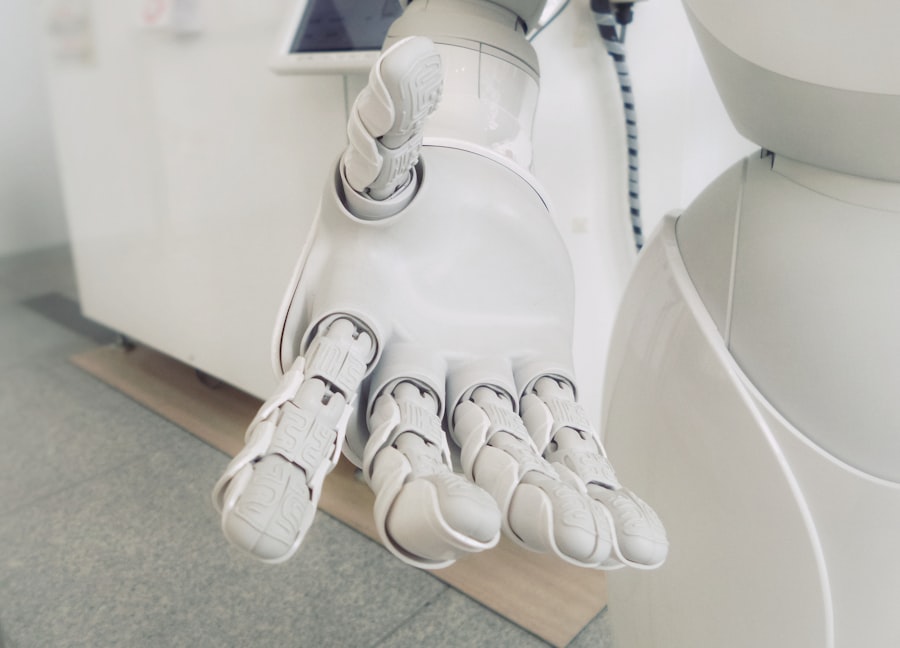
The potential impact of AI on personalised healthcare is profound and multifaceted. One of the most significant benefits is the enhancement of clinical decision-making. AI systems can synthesise vast amounts of data from diverse sources, including clinical studies, patient records, and real-time health monitoring devices.
This capability enables healthcare professionals to make more informed decisions based on comprehensive insights rather than relying solely on their expertise or limited data. As a result, patients may receive more accurate diagnoses and more effective treatment plans tailored specifically to their needs. Moreover, AI has the potential to streamline administrative processes within healthcare systems.
By automating routine tasks such as appointment scheduling, billing, and documentation, AI can free up valuable time for healthcare providers to focus on patient care. This efficiency not only improves the overall patient experience but also allows for a more responsive healthcare system that can adapt quickly to changing patient needs. As AI continues to evolve, its integration into personalised healthcare could lead to a paradigm shift in how care is delivered, making it more efficient, effective, and patient-centred.
Ethical and Privacy Considerations in AI-driven Personalized Healthcare
| Consideration | Description |
|---|---|
| Informed Consent | Ensuring patients understand how their data will be used in AI-driven healthcare and obtaining their consent. |
| Data Privacy | Protecting sensitive patient data from unauthorized access and ensuring compliance with data protection regulations. |
| Algorithm Bias | Awareness and mitigation of biases in AI algorithms that could lead to unfair treatment of certain patient groups. |
| Transparency | Providing clear explanations of how AI algorithms make decisions to ensure trust and understanding among patients and healthcare providers. |
| Accountability | Establishing clear lines of responsibility for the outcomes of AI-driven healthcare decisions and interventions. |
While the benefits of AI in personalised healthcare are substantial, they are accompanied by significant ethical and privacy considerations that must be addressed. One primary concern is the handling of sensitive patient data. The use of AI necessitates access to large datasets that often contain personal health information.
Ensuring the privacy and security of this data is paramount; breaches could lead to severe consequences for patients, including identity theft and discrimination based on health status. Therefore, robust data protection measures must be implemented to safeguard patient information while still allowing for the beneficial use of AI technologies. Additionally, there are ethical implications surrounding algorithmic bias in AI systems.
If the data used to train these algorithms is not representative of diverse populations, there is a risk that the resulting models may perpetuate existing health disparities. For instance, if an AI system is primarily trained on data from one demographic group, it may not perform as well for individuals from other backgrounds. This raises questions about equity in healthcare access and outcomes.
To mitigate these risks, it is essential for developers and healthcare providers to prioritise inclusivity in data collection and ensure that AI systems are rigorously tested across diverse populations.
Challenges and Barriers to the Adoption of AI in Personalized Healthcare
Despite the promising potential of AI in personalised healthcare, several challenges and barriers hinder its widespread adoption. One significant obstacle is the integration of AI technologies into existing healthcare infrastructures. Many healthcare systems operate on legacy systems that may not be compatible with advanced AI solutions.
This lack of interoperability can create silos of information that limit the effectiveness of AI applications. To overcome this barrier, healthcare organisations must invest in modernising their IT systems and ensuring seamless data exchange between different platforms. Another challenge lies in the need for training and education among healthcare professionals.
The successful implementation of AI technologies requires clinicians to understand how these tools work and how to interpret their outputs effectively. However, many healthcare providers may lack the necessary training in data science or machine learning principles. To address this gap, educational initiatives must be developed to equip healthcare professionals with the skills needed to leverage AI effectively in their practice.
By fostering a culture of continuous learning and adaptation, the healthcare sector can better prepare itself for the integration of AI technologies.
The Role of AI in Predictive and Preventive Medicine

AI’s role in predictive and preventive medicine is becoming increasingly prominent as it offers innovative solutions for anticipating health issues before they arise. Predictive analytics powered by AI can analyse historical patient data alongside real-time health information to identify trends and risk factors associated with various diseases. For example, machine learning algorithms can assess lifestyle factors such as diet, exercise, and genetic predispositions to predict an individual’s likelihood of developing chronic conditions like hypertension or obesity.
This capability allows for early intervention strategies tailored specifically to at-risk patients. Preventive medicine benefits significantly from AI’s ability to facilitate personalised health recommendations based on individual risk profiles. By integrating data from wearable devices that monitor vital signs and activity levels with EHRs, AI can provide actionable insights that encourage healthier behaviours.
For instance, an AI system might suggest dietary changes or exercise regimens based on a patient’s unique health metrics. This proactive approach not only empowers patients to take charge of their health but also reduces the burden on healthcare systems by preventing diseases before they necessitate costly treatments.
Future Developments and Innovations in AI for Personalized Healthcare
Looking ahead, the future developments and innovations in AI for personalised healthcare are poised to reshape the landscape significantly. One area ripe for advancement is the integration of AI with telemedicine platforms. As remote consultations become more prevalent, AI can enhance these interactions by providing real-time data analysis during virtual appointments.
For instance, an AI system could analyse a patient’s symptoms as they describe them during a telehealth visit and suggest potential diagnoses or treatment options for the clinician’s consideration. Furthermore, advancements in natural language processing (NLP) are expected to improve patient engagement through conversational agents or chatbots that provide personalised health information and support. These tools can assist patients in managing their conditions by answering questions about medications or lifestyle changes based on their specific health profiles.
As NLP technology continues to evolve, these interactions will become increasingly sophisticated, offering patients a more interactive and supportive experience in managing their health.
The Future Landscape of AI in Personalized Healthcare
In conclusion, the future landscape of AI in personalised healthcare holds immense promise for enhancing patient care and improving health outcomes across diverse populations. As AI technologies continue to evolve and integrate into clinical practice, they will enable more precise diagnoses, tailored treatment plans, and proactive preventive measures that address individual patient needs. However, it is crucial for stakeholders within the healthcare sector to navigate the ethical considerations surrounding data privacy and algorithmic bias while addressing challenges related to infrastructure and training.
The successful implementation of AI in personalised healthcare will require collaboration among technologists, clinicians, policymakers, and patients alike. By fostering an environment that prioritises innovation while safeguarding ethical standards, we can harness the full potential of AI to create a more effective and equitable healthcare system for all individuals. As we move forward into this new era of medicine, it is essential to remain vigilant about both the opportunities and challenges presented by this transformative technology.
In a recent article on Twitter testing an unprecedented feature in social media, it discusses how the platform is constantly evolving to meet the needs of its users. This relates to the future of AI in personalized healthcare as both industries are leveraging technology to improve user experiences and outcomes. Just as Twitter is exploring new features to enhance social media interactions, healthcare providers are looking to AI to tailor treatments and care plans to individual patients. The integration of innovative technologies like AI is shaping the future of personalised healthcare in exciting ways.
FAQs
What is AI in personalized healthcare?
AI in personalized healthcare refers to the use of artificial intelligence technologies, such as machine learning and natural language processing, to analyze and interpret complex medical data in order to provide personalized treatment and care for individual patients.
How is AI being used in personalized healthcare?
AI is being used in personalized healthcare to analyze large volumes of patient data, including genetic information, medical history, and lifestyle factors, to identify patterns and make predictions about individual health outcomes. This information can then be used to tailor treatment plans and interventions to meet the specific needs of each patient.
What are the potential benefits of AI in personalized healthcare?
The potential benefits of AI in personalized healthcare include improved accuracy and efficiency in diagnosis and treatment, better prediction of disease risk and progression, and the ability to deliver more targeted and effective interventions for individual patients. This can ultimately lead to better health outcomes and a more personalized approach to healthcare.
What are the challenges of implementing AI in personalized healthcare?
Challenges of implementing AI in personalized healthcare include concerns about data privacy and security, the need for robust validation and regulation of AI algorithms, and the potential for bias in AI-driven decision-making. Additionally, there may be resistance from healthcare professionals and patients to adopt AI technologies in clinical practice.
What does the future hold for AI in personalized healthcare?
The future of AI in personalized healthcare is likely to involve continued advancements in AI technologies, including the development of more sophisticated algorithms and the integration of AI into clinical decision support systems. There is also potential for AI to play a greater role in drug discovery and development, as well as in the delivery of precision medicine.


 into healthcare has emerged as a transformative force, particularly in the realm of personalised..)