

The integration of artificial intelligence (AI) into urban planning represents a transformative shift in how cities are designed, developed, and managed. As urban areas continue to expand and evolve, the complexities associated with urbanisation necessitate innovative solutions that can address the myriad challenges faced by city planners. AI offers a suite of tools that can enhance decision-making processes, optimise resource allocation, and improve the overall quality of life for residents.
By harnessing vast amounts of data, AI can provide insights that were previously unattainable, enabling planners to create more efficient, sustainable, and resilient urban environments. Urban planning has traditionally relied on historical data and human expertise to inform decisions. However, the rapid pace of technological advancement has introduced new methodologies that can significantly augment these traditional approaches.
AI systems can analyse patterns in data, predict future trends, and simulate various scenarios, allowing planners to make informed choices that consider a wide range of variables. This article will explore the various dimensions of AI in urban planning, including the tools and technologies available, its impact on transportation and mobility, its role in fostering sustainable cities, and the ethical considerations that arise from its implementation. Have you read the latest blog post on artificial intelligence?
Summary
- AI is revolutionising urban planning by providing advanced tools and technologies for data analysis and decision-making.
- AI tools such as machine learning and predictive analytics are being used to improve urban transportation and mobility, leading to more efficient and sustainable cities.
- AI is playing a crucial role in the development of sustainable and smart cities by optimising energy usage, waste management, and infrastructure planning.
- Data analysis powered by AI is helping urban planners to make informed decisions and predictions for urban development and growth.
- Ethical considerations and challenges in AI-driven urban planning need to be addressed to ensure fair and unbiased decision-making and to protect privacy and security.
AI Tools and Technologies in Urban Planning
A variety of AI tools and technologies are currently being employed in urban planning, each offering unique capabilities that enhance the planning process. Geographic Information Systems (GIS) integrated with AI algorithms allow planners to visualise spatial data in innovative ways. These systems can analyse geographical patterns and trends, enabling planners to identify areas of need or opportunity within a city.
For instance, AI-enhanced GIS can help determine optimal locations for new infrastructure projects by analysing demographic data, land use patterns, and environmental factors. Moreover, machine learning algorithms are increasingly being used to predict urban growth and assess the impact of various planning decisions. By training models on historical data, these algorithms can forecast future developments with remarkable accuracy.
This predictive capability is invaluable for urban planners who must consider long-term implications when making decisions about zoning, transportation networks, and public services. Additionally, AI-driven simulation tools can model the effects of different planning scenarios, allowing stakeholders to visualise potential outcomes before implementation.
Impact of AI on Transportation and Mobility
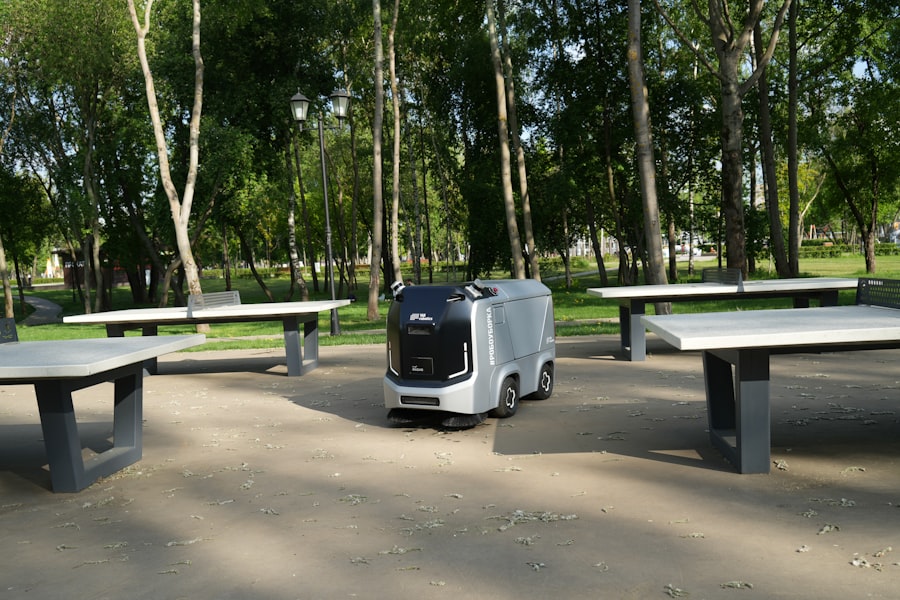
Transportation is a critical component of urban planning, and AI is revolutionising how cities approach mobility. Intelligent transportation systems (ITS) utilise AI to optimise traffic flow, reduce congestion, and enhance public transport efficiency. For example, real-time data from sensors and cameras can be analysed by AI algorithms to adjust traffic signals dynamically based on current conditions.
This not only improves travel times but also reduces emissions by minimising idling at intersections. Furthermore, AI is playing a pivotal role in the development of autonomous vehicles (AVs), which have the potential to reshape urban landscapes significantly. As AV technology matures, cities will need to adapt their infrastructure to accommodate these vehicles.
AI can assist in determining the best strategies for integrating AVs into existing transport systems while ensuring safety and accessibility for all users. Additionally, ride-sharing platforms powered by AI are changing how people navigate urban environments, providing flexible transportation options that can alleviate pressure on public transit systems.
AI’s Role in Sustainable and Smart Cities
| Metrics | Data |
|---|---|
| Reduction in Energy Consumption | 20% |
| Improvement in Traffic Flow | 30% |
| Enhancement in Waste Management | 25% |
| Reduction in Carbon Emissions | 15% |
| Enhancement in Public Safety | 40% |
The concept of smart cities is intrinsically linked to the application of AI technologies. Smart cities leverage data and connectivity to enhance urban living through improved services and infrastructure. AI plays a crucial role in this transformation by enabling more efficient energy management, waste reduction, and resource allocation.
For instance, smart grids powered by AI can optimise energy distribution based on real-time consumption patterns, leading to reduced energy waste and lower costs for residents. Sustainability is another critical focus area where AI can make a significant impact. By analysing environmental data, AI can help urban planners identify areas at risk of flooding or pollution and develop strategies to mitigate these risks.
Additionally, AI-driven predictive analytics can inform decisions related to green spaces and biodiversity conservation within urban settings. As cities strive to meet sustainability goals, the integration of AI into planning processes will be essential for creating resilient urban ecosystems that can adapt to changing environmental conditions.
AI and Data Analysis for Urban Development
Data analysis is at the heart of effective urban planning, and AI enhances this process by providing advanced analytical capabilities. The sheer volume of data generated in urban environments—from traffic patterns to social media activity—can be overwhelming for traditional analytical methods. However, AI algorithms excel at processing large datasets quickly and extracting meaningful insights that can inform planning decisions.
For example, sentiment analysis tools powered by natural language processing (NLP) can gauge public opinion on various urban issues by analysing social media posts or community feedback. This information can be invaluable for planners seeking to engage with residents and understand their needs better. Additionally, predictive modelling techniques can help assess the potential impact of new policies or developments on local communities, ensuring that decisions are data-driven and aligned with the aspirations of residents.
Ethical Considerations in AI-driven Urban Planning

While the benefits of integrating AI into urban planning are substantial, it is essential to address the ethical considerations that accompany its use. One significant concern is the potential for bias in AI algorithms, which can lead to inequitable outcomes if not carefully managed. For instance, if historical data reflects systemic inequalities, AI systems trained on this data may inadvertently perpetuate these biases in planning decisions.
It is crucial for urban planners to ensure that datasets are representative and inclusive to avoid exacerbating existing disparities. Moreover, transparency in AI decision-making processes is vital for building public trust. Residents must understand how data is being used and how decisions are made based on AI analyses.
Engaging communities in discussions about AI applications in urban planning can foster a sense of ownership and accountability among stakeholders. Additionally, privacy concerns must be addressed; as cities collect more data to inform planning decisions, safeguarding personal information becomes paramount.
Challenges and Opportunities in AI Integration
The integration of AI into urban planning presents both challenges and opportunities that must be navigated carefully. One significant challenge is the need for skilled professionals who can effectively implement and manage AI technologies within planning departments. As the demand for data-driven decision-making increases, there is a growing need for training programmes that equip planners with the necessary skills to leverage AI tools effectively.
On the other hand, the opportunities presented by AI integration are vast. Cities that embrace these technologies stand to gain a competitive advantage in terms of efficiency and innovation. By adopting AI-driven approaches, urban planners can create more responsive and adaptive environments that meet the evolving needs of their populations.
Furthermore, collaboration between public agencies, private sector partners, and academic institutions can foster innovation and drive advancements in AI applications for urban planning.
Future Outlook for AI in Urban Planning
Looking ahead, the future of AI in urban planning appears promising as cities continue to grapple with complex challenges related to growth, sustainability, and resilience. The ongoing development of advanced machine learning techniques will likely enhance predictive capabilities further, allowing planners to anticipate changes in urban dynamics with greater accuracy. As technology continues to evolve, we may also see increased integration between various systems—such as transportation networks, energy grids, and public services—facilitated by AI.
Moreover, as public awareness of smart city initiatives grows, there will be greater demand for transparency and community engagement in the planning process. Planners will need to prioritise inclusive practices that ensure diverse voices are heard in decision-making processes involving AI technologies. Ultimately, the successful integration of AI into urban planning will depend on a balanced approach that considers both technological advancements and ethical implications while striving for equitable outcomes for all residents.
The article “Three Key Technologies for Companies in 2022” explores the latest advancements in technology that are shaping the business landscape. From artificial intelligence to blockchain, these technologies are revolutionising the way companies operate and interact with their customers. As discussed in the article on the impact of AI on urban planning and development, these key technologies are also playing a crucial role in shaping the future of our cities. To learn more about the cutting-edge technologies driving businesses forward, check out the full article here.
FAQs
What is AI?
AI stands for artificial intelligence, which refers to the simulation of human intelligence in machines that are programmed to think and learn like humans.
How is AI impacting urban planning and development?
AI is impacting urban planning and development by providing tools for analyzing and predicting urban trends, optimizing city infrastructure, and improving decision-making processes.
What are some specific ways AI is being used in urban planning?
AI is being used in urban planning for traffic management, energy efficiency, public safety, and infrastructure maintenance. It is also used for analyzing demographic data and predicting future urban trends.
What are the benefits of using AI in urban planning and development?
The benefits of using AI in urban planning and development include improved efficiency in resource allocation, better decision-making based on data analysis, and the ability to predict and plan for future urban challenges.
Are there any challenges or concerns associated with using AI in urban planning?
Some challenges and concerns associated with using AI in urban planning include data privacy issues, potential job displacement, and the need for ethical and transparent use of AI algorithms.


 into urban planning represents a transformative shift in how cities are designed, developed, and..)