
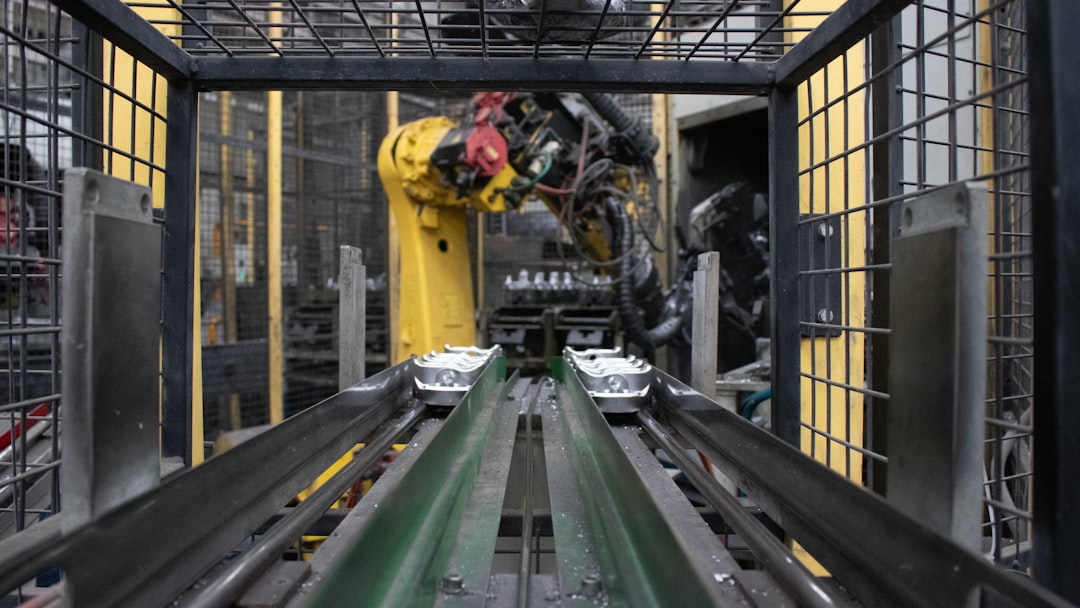
The Industrial Revolution, which began in the late 18th century, marked a significant turning point in the history of manufacturing. This period was characterised by a shift from agrarian economies to industrialised ones, primarily in Britain, but soon spreading across Europe and North America. The introduction of machinery transformed traditional handcraft methods, leading to increased production capabilities and efficiency.
Factories emerged as central hubs of production, where workers operated machines that could produce goods at an unprecedented scale. This transition not only revolutionised the manufacturing process but also had profound social and economic implications, including urbanisation and changes in labour dynamics. The innovations of the Industrial Revolution laid the groundwork for modern manufacturing practices.
The steam engine, for instance, enabled factories to operate machinery more efficiently than ever before, while innovations in textile manufacturing, such as the spinning jenny and power loom, significantly increased output. These advancements not only improved productivity but also reduced costs, making goods more accessible to a broader population. As a result, the Industrial Revolution catalysed a shift in consumer behaviour and expectations, setting the stage for the mass production techniques that would dominate the 20th century. Have you read the latest blog post on artificial intelligence?
Summary
- The Industrial Revolution transformed manufacturing from manual to mechanized processes, leading to increased production and economic growth.
- The introduction of electricity and the assembly line revolutionized manufacturing, allowing for mass production and improved efficiency.
- Automation and robotics have further enhanced manufacturing by increasing precision, speed, and safety in production processes.
- Computer-aided design and 3D printing have revolutionized prototyping and production, allowing for rapid iteration and customization.
- The integration of Internet of Things (IoT) in manufacturing has enabled real-time monitoring, predictive maintenance, and improved supply chain management.
The Impact of Electricity and the Assembly Line
The advent of electricity in the late 19th century further transformed manufacturing processes, providing a reliable and efficient power source that replaced steam engines. Factories began to harness electrical energy to power machinery, which allowed for greater precision and speed in production. This shift not only enhanced productivity but also improved working conditions, as electric lighting made it possible to work longer hours in safer environments.
The introduction of electric power was a pivotal moment that enabled manufacturers to innovate continuously and expand their operations. Simultaneously, the assembly line concept emerged as a revolutionary method of production. Pioneered by figures such as Henry Ford in the early 20th century, the assembly line allowed for the mass production of goods by breaking down complex tasks into simpler, repetitive actions performed by workers stationed along a conveyor belt.
This method drastically reduced production time and costs while increasing output. The combination of electricity and assembly line techniques created a synergy that propelled manufacturing into a new era, characterised by efficiency and scalability. As a result, industries could produce large quantities of standardised products, fundamentally altering consumer markets and economic structures.
The Rise of Automation and Robotics in Manufacturing
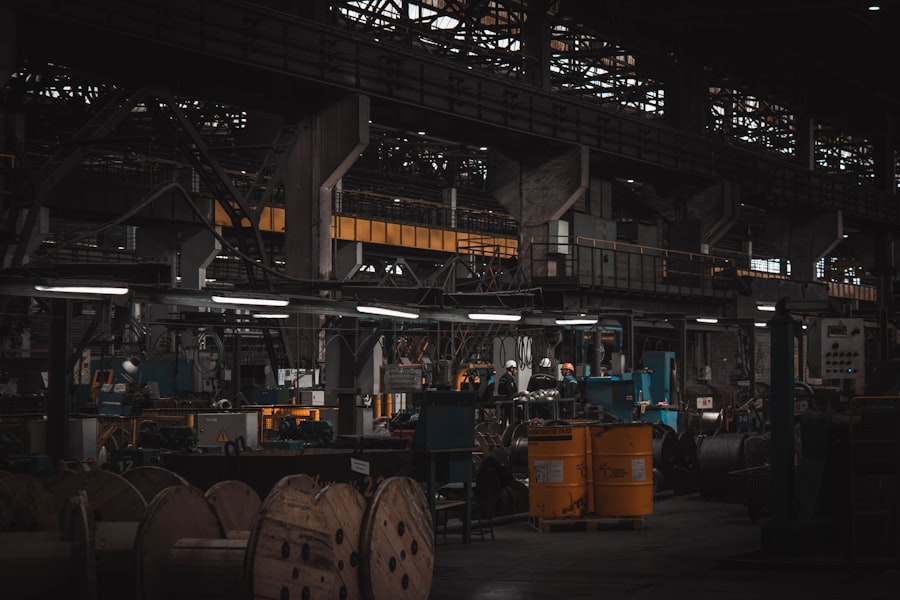
As technology continued to advance throughout the latter half of the 20th century, automation began to play an increasingly prominent role in manufacturing. The introduction of programmable logic controllers (PLCs) allowed for greater control over machinery and processes, enabling manufacturers to automate repetitive tasks with precision. This shift not only improved efficiency but also reduced human error, leading to higher quality products.
Automation became particularly valuable in industries where consistency and speed were paramount, such as automotive manufacturing. The rise of robotics further revolutionised manufacturing processes. Robots equipped with advanced sensors and artificial intelligence capabilities began to take on more complex tasks, from welding and painting to assembly and packaging.
These machines could operate continuously without fatigue, significantly increasing productivity while allowing human workers to focus on more strategic roles within the production process. The integration of robotics into manufacturing not only enhanced operational efficiency but also contributed to improved workplace safety by taking over hazardous tasks that posed risks to human workers.
The Influence of Computer-Aided Design and 3D Printing
| Metrics | Data |
|---|---|
| Number of CAD software users | Millions |
| Percentage of industries using 3D printing | Over 70% |
| Reduction in product development time | Up to 50% |
| Cost savings from 3D printing | Up to 90% |
| Number of 3D printed products in the market | Thousands |
The introduction of computer-aided design (CAD) in the late 20th century marked another significant advancement in manufacturing technology. CAD software enabled designers and engineers to create detailed digital models of products before they were physically produced. This capability allowed for greater precision in design, facilitating rapid prototyping and iterative testing.
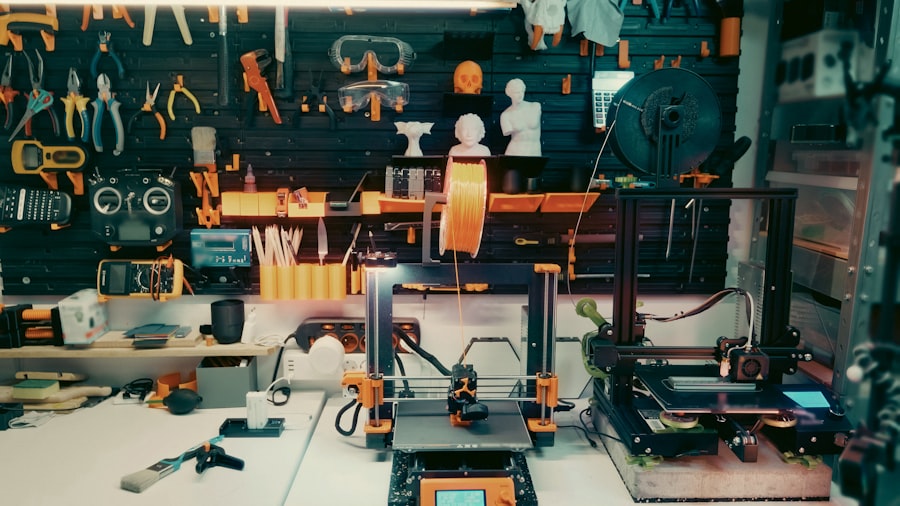
As a result, manufacturers could identify potential issues early in the design process, reducing waste and minimising costs associated with rework. In recent years, 3D printing has emerged as a transformative technology within the manufacturing sector. Also known as additive manufacturing, 3D printing allows for the creation of complex geometries that would be difficult or impossible to achieve using traditional manufacturing methods.
This technology has opened new avenues for customisation and on-demand production, enabling manufacturers to respond quickly to changing consumer demands. Furthermore, 3D printing has the potential to reduce material waste significantly, as it builds objects layer by layer rather than cutting away material from larger blocks. Together, CAD and 3D printing have reshaped product development processes, fostering innovation and enhancing competitiveness in the manufacturing landscape.
The Integration of Internet of Things (IoT) in Manufacturing
The integration of the Internet of Things (IoT) into manufacturing processes has ushered in a new era of connectivity and data-driven decision-making. IoT refers to the network of interconnected devices that communicate with each other over the internet, allowing for real-time monitoring and control of manufacturing operations. By equipping machinery with sensors and connectivity capabilities, manufacturers can gather vast amounts of data on equipment performance, production rates, and environmental conditions.
This data-driven approach enables manufacturers to optimise their operations significantly. For instance, predictive maintenance powered by IoT data can help identify potential equipment failures before they occur, reducing downtime and maintenance costs. Additionally, real-time monitoring allows for immediate adjustments to production processes based on current conditions, enhancing overall efficiency.
The IoT’s ability to provide actionable insights has transformed how manufacturers approach operational challenges, fostering a culture of continuous improvement and innovation.
The Emergence of Artificial Intelligence and Machine Learning in Production
Artificial intelligence (AI) and machine learning (ML) have emerged as powerful tools in modern manufacturing, enabling companies to analyse vast datasets and derive insights that were previously unattainable. AI algorithms can identify patterns within production data that human analysts might overlook, leading to more informed decision-making. For example, AI can optimise supply chain logistics by predicting demand fluctuations based on historical data and market trends.
Machine learning algorithms can also enhance quality control processes by analysing product defects and identifying root causes more effectively than traditional methods. By continuously learning from new data inputs, these systems can adapt over time, improving their accuracy and effectiveness in detecting anomalies. The integration of AI and ML into manufacturing processes not only enhances operational efficiency but also drives innovation by enabling manufacturers to develop smarter products that can learn from user interactions.
The Role of Big Data and Analytics in Optimising Manufacturing Processes
In an era characterised by data proliferation, big data analytics has become an essential component of optimising manufacturing processes. Manufacturers now have access to vast amounts of data generated from various sources, including IoT devices, production machinery, supply chain systems, and customer interactions. By leveraging advanced analytics tools, companies can extract valuable insights from this data to inform strategic decisions.
For instance, big data analytics can help manufacturers identify inefficiencies within their operations by analysing production workflows and identifying bottlenecks. By understanding where delays occur or where resources are underutilised, companies can implement targeted improvements that enhance overall productivity. Additionally, predictive analytics can forecast future trends based on historical data, allowing manufacturers to proactively adjust their strategies in response to changing market conditions.
The ability to harness big data effectively has become a competitive advantage for manufacturers seeking to thrive in an increasingly complex landscape.
As we look towards the future of manufacturing, the concept of Industry 4.0 emerges as a guiding framework for innovation and transformation within the sector. Industry 4.0 represents the fourth industrial revolution characterised by the convergence of digital technologies with physical manufacturing processes. This paradigm shift encompasses advancements such as IoT integration, AI-driven automation, big data analytics, and smart factories where machines communicate seamlessly with one another.
The future of manufacturing will likely see an increased emphasis on sustainability and circular economy principles as companies strive to minimise their environmental impact while maximising resource efficiency. Innovations such as biodegradable materials and energy-efficient production methods will play a crucial role in shaping sustainable practices within the industry. Furthermore, as consumer preferences evolve towards personalised products and services, manufacturers will need to adopt flexible production systems capable of accommodating diverse demands without sacrificing efficiency.
In conclusion, the evolution of manufacturing has been marked by significant technological advancements that have transformed how products are designed, produced, and delivered. From the Industrial Revolution’s inception to today’s digital age characterised by Industry 4.0 principles, manufacturers must continue to adapt and innovate to remain competitive in an ever-changing landscape. Embracing these advancements will not only enhance operational efficiency but also pave the way for a more sustainable future in manufacturing.
The article 80% of warehouse employees say that technology is producing positive changes in their work explores how technology is impacting the manufacturing industry by improving efficiency and productivity. It highlights the positive feedback from warehouse employees who have experienced firsthand the benefits of technological advancements in their daily tasks. This article further supports the notion that technology plays a crucial role in shaping the future of manufacturing processes.
FAQs
What is the impact of technology on manufacturing?
Technology has had a significant impact on manufacturing, leading to increased efficiency, productivity, and quality of products. Automation, robotics, and advanced machinery have revolutionized the manufacturing industry, leading to faster production processes and reduced costs.
How has technology improved efficiency in manufacturing?
Technology has improved efficiency in manufacturing by automating repetitive tasks, streamlining production processes, and reducing the need for manual labour. This has led to faster production times, reduced errors, and increased output.
What role do robotics play in modern manufacturing?
Robotics play a crucial role in modern manufacturing by performing tasks that are repetitive, dangerous, or require precision. They can handle heavy loads, work in hazardous environments, and operate 24/7, leading to increased productivity and safety in manufacturing facilities.
How has technology impacted the quality of products in manufacturing?
Technology has improved the quality of products in manufacturing by enabling precision engineering, advanced quality control systems, and real-time monitoring of production processes. This has led to higher quality products that meet or exceed customer expectations.
What are some examples of technology used in modern manufacturing?
Some examples of technology used in modern manufacturing include 3D printing, CNC machining, industrial robots, IoT (Internet of Things) devices, advanced materials, and data analytics. These technologies have revolutionized the way products are designed, produced, and monitored in manufacturing facilities.
What are the challenges of implementing technology in manufacturing?
Some challenges of implementing technology in manufacturing include the initial cost of investment, the need for skilled workers to operate and maintain advanced machinery, and the potential for job displacement due to automation. Additionally, integrating new technologies with existing systems and processes can be complex and time-consuming.


