

Fifth-generation wireless technology, commonly referred to as 5G, represents a significant leap forward in mobile communication standards. It is designed to provide faster data speeds, reduced latency, and the ability to connect a greater number of devices simultaneously compared to its predecessor, 4G. The architecture of 5G is built on a combination of new technologies, including millimetre-wave frequencies, small cell networks, and advanced antenna systems.
This multifaceted approach allows for a more efficient use of the radio spectrum, enabling higher bandwidth and improved overall performance. The deployment of 5G technology is not merely an incremental upgrade; it is a transformative shift that has the potential to revolutionise various sectors. With its enhanced capabilities, 5G is expected to facilitate innovations in areas such as autonomous vehicles, telemedicine, and augmented reality.
The technology operates on three main frequency bands: low-band, mid-band, and high-band (or mmWave), each offering distinct advantages and challenges. Low-band frequencies provide extensive coverage but at lower speeds, while high-band frequencies offer ultra-fast speeds but with limited range. Mid-band frequencies strike a balance between the two, making them particularly valuable for urban environments. Have you read the latest blog post on artificial intelligence?
Summary
- 5G technology promises faster speeds, lower latency, and increased capacity for data transmission, revolutionizing the way we connect and communicate.
- The impact of 5G technology on communication and connectivity is expected to be profound, enabling seamless and reliable connections for both personal and business use.
- 5G technology is set to advance industry and innovation by enabling new applications such as autonomous vehicles, smart factories, and remote surgery, among others.
- The integration of 5G technology with the Internet of Things (IoT) will enable a vast network of interconnected devices, revolutionizing various industries and daily life.
- The future of 5G technology holds potential for applications in virtual reality, augmented reality, and artificial intelligence, driving further advancements in technology and connectivity.
The Impact of 5G Technology on Communication and Connectivity
The introduction of 5G technology is poised to redefine the landscape of communication and connectivity. One of the most notable impacts is the dramatic increase in data transfer speeds. Users can expect download speeds that are several times faster than those offered by 4G networks, which will enhance activities such as streaming high-definition video, online gaming, and real-time collaboration in professional settings.
This increased speed not only improves user experience but also enables new applications that were previously impractical due to bandwidth limitations. Moreover, the reduced latency associated with 5G technology—often cited as being as low as one millisecond—opens up new possibilities for real-time communication. This is particularly significant for applications that require instantaneous feedback, such as remote surgery or autonomous vehicle navigation.
The ability to connect multiple devices simultaneously without degradation in performance also means that smart homes and smart offices can operate more efficiently. As a result, 5G technology is set to enhance both personal and professional communication, fostering a more interconnected world.
The Role of 5G Technology in Advancing Industry and Innovation
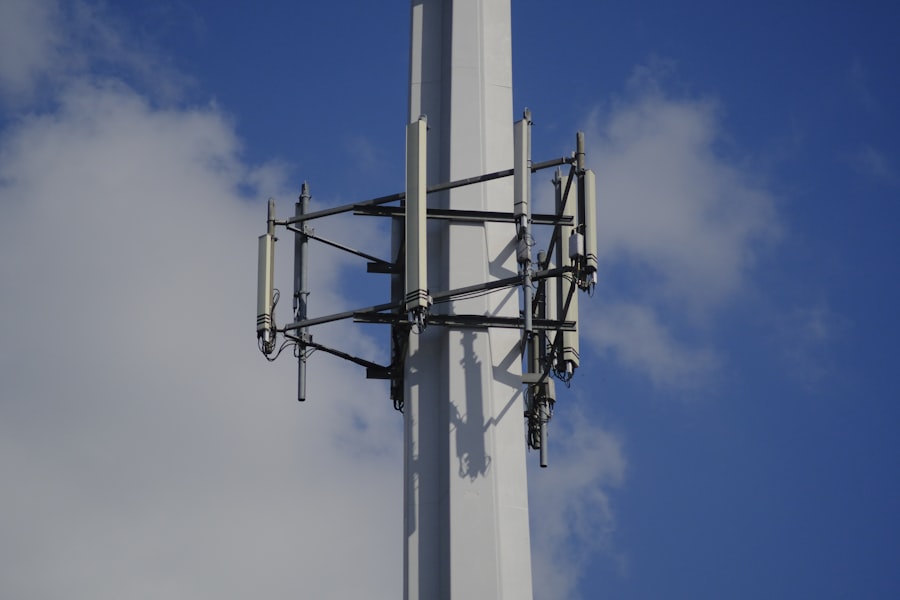
5G technology is not only transforming personal communication but also playing a pivotal role in advancing various industries. The manufacturing sector, for instance, stands to benefit immensely from the implementation of 5G networks. With the ability to connect numerous devices and sensors in real-time, manufacturers can optimise production processes through enhanced automation and data analytics.
This connectivity allows for predictive maintenance of machinery, reducing downtime and increasing overall efficiency. In addition to manufacturing, sectors such as healthcare are also experiencing significant advancements due to 5G technology. Telemedicine has gained traction in recent years, but the capabilities of 5G can take it to new heights.
High-definition video consultations can become seamless, while remote monitoring devices can transmit data instantaneously to healthcare providers. This not only improves patient care but also expands access to medical services in remote areas where traditional healthcare facilities may be lacking. The potential for innovation across various industries is vast, with 5G serving as a catalyst for new business models and services.
5G Technology and the Internet of Things (IoT)
| Metrics | 5G Technology | Internet of Things (IoT) |
|---|---|---|
| Data Transfer Speed | Up to 10 Gbps | Varies based on device and application |
| Latency | 1-4 milliseconds | Depends on network and device |
| Device Connectivity | Supports up to 1 million devices per square kilometre | Can connect billions of devices |
| Energy Efficiency | Improved energy efficiency compared to 4G | IoT devices are designed for low power consumption |
| Use Cases | Enhanced mobile broadband, massive IoT, critical communications | Smart homes, industrial automation, healthcare monitoring |
The Internet of Things (IoT) refers to the network of interconnected devices that communicate and exchange data with one another. The advent of 5G technology is set to significantly enhance the capabilities of IoT systems by providing the necessary infrastructure for large-scale connectivity. With its ability to support millions of devices per square kilometre, 5G can facilitate the growth of smart cities, smart homes, and various industrial IoT applications.
In smart cities, for example, 5G technology can enable real-time monitoring of traffic patterns, energy consumption, and public safety systems. This data can be analysed to improve urban planning and resource allocation, ultimately leading to more efficient city management. Similarly, in smart homes, devices such as thermostats, security cameras, and appliances can communicate with each other more effectively through a robust 5G network.
This interconnectedness not only enhances convenience for users but also contributes to energy efficiency and sustainability.
The Future of 5G Technology: Potential Applications and Developments
As 5G technology continues to evolve, its potential applications are expanding rapidly. One area that holds promise is augmented reality (AR) and virtual reality (VR). With the high data transfer speeds and low latency offered by 5G networks, immersive experiences can be delivered seamlessly.
This could revolutionise industries such as gaming, education, and training by providing users with interactive environments that were previously unattainable. Another exciting development is the potential for 5G to support advanced robotics and automation. In sectors like agriculture, for instance, farmers could deploy drones equipped with sensors that collect data on crop health in real-time.
This information could then be analysed using AI algorithms to optimise farming practices and increase yields. The integration of 5G with artificial intelligence (AI) will likely lead to smarter systems capable of making autonomous decisions based on real-time data analysis.
Challenges and Concerns Surrounding the Implementation of 5G Technology
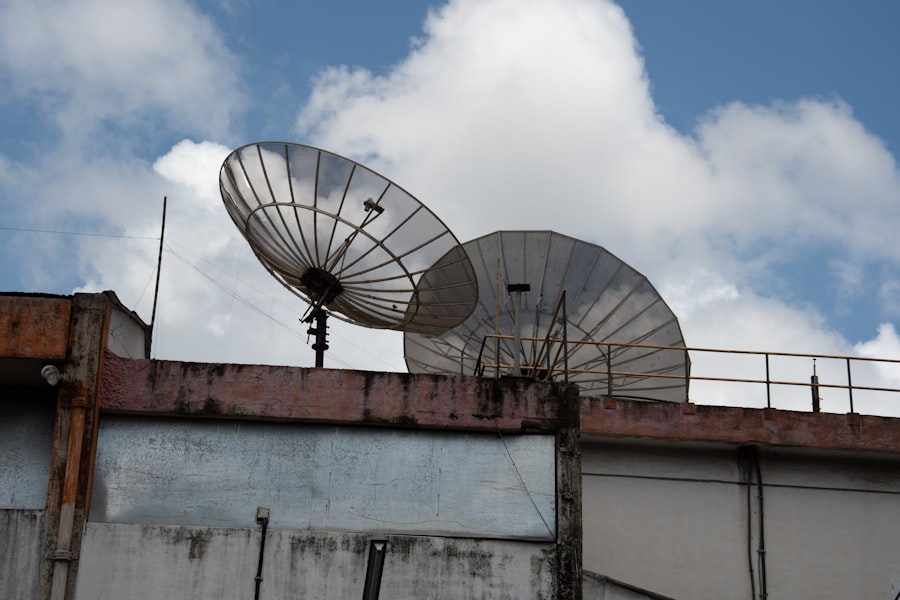
Despite its numerous advantages, the implementation of 5G technology is not without challenges and concerns. One significant issue is the infrastructure required for widespread deployment. The transition from 4G to 5G necessitates a substantial investment in new equipment and technologies, including the installation of small cell networks to ensure adequate coverage.
This can be particularly challenging in rural areas where the return on investment may be less attractive for service providers. Additionally, there are concerns regarding security and privacy associated with increased connectivity. As more devices become interconnected through 5G networks, the potential for cyberattacks also rises.
Ensuring robust security measures are in place will be crucial to protect sensitive data and maintain user trust. Furthermore, there are ongoing debates about the health implications of increased exposure to radiofrequency radiation from the dense network of antennas required for 5G coverage.
The Global Race for 5G Dominance: Competition and Collaboration
The rollout of 5G technology has sparked a global race among nations and corporations vying for dominance in this critical area of telecommunications. Countries such as China, the United States, South Korea, and several European nations are investing heavily in developing their 5G infrastructure and capabilities. This competition has implications not only for economic growth but also for national security, as control over telecommunications infrastructure can influence geopolitical dynamics.
However, amidst this competition, there are also opportunities for collaboration. International partnerships can facilitate knowledge sharing and best practices in deploying 5G technology effectively. Collaborative efforts can help address common challenges such as standardisation and interoperability among different networks.
By working together, nations can harness the full potential of 5G technology while ensuring that it is implemented safely and responsibly.
The Role of 5G Technology in Shaping the Future of Smart Cities
The concept of smart cities is increasingly becoming a focal point in urban planning discussions worldwide. At the heart of this transformation lies 5G technology, which provides the necessary infrastructure for integrating various systems within urban environments. Smart cities leverage data collected from sensors and connected devices to enhance public services such as transportation, waste management, and energy distribution.
For instance, traffic management systems can utilise real-time data from connected vehicles and infrastructure to optimise traffic flow and reduce congestion. Similarly, smart energy grids can monitor consumption patterns and adjust supply accordingly, leading to more efficient energy use. As cities continue to grow and face challenges related to sustainability and resource management, the role of 5G technology will be crucial in creating responsive urban environments that improve quality of life for residents.
In conclusion, the advent of 5G technology marks a pivotal moment in the evolution of communication and connectivity. Its impact extends far beyond faster mobile internet; it has the potential to transform industries, enhance IoT capabilities, and shape the future of urban living through smart city initiatives. While challenges remain in terms of infrastructure investment and security concerns, the opportunities presented by 5G are vast and varied.
As nations navigate this new landscape, collaboration will be essential in harnessing the full potential of this groundbreaking technology while addressing its associated challenges responsibly.
In a related article, Microsoft has issued a warning regarding the increasing toll fraud and Android malware app capabilities. The article highlights the growing threat of cybercriminals targeting unsuspecting users through malicious apps and fraudulent activities. To read more about this concerning issue, click here.
FAQs
What is 5G technology?
5G technology is the fifth generation of mobile network technology, designed to provide faster and more reliable wireless communication. It aims to offer higher data speeds, lower latency, and increased capacity compared to previous generations of mobile networks.
How does 5G technology work?
5G technology operates on higher frequency radio waves, allowing for greater data transfer speeds. It also utilizes advanced antenna technology, such as massive MIMO (Multiple-Input Multiple-Output) and beamforming, to improve network efficiency and coverage.
What are the benefits of 5G technology?
Some of the key benefits of 5G technology include faster download and upload speeds, reduced latency for real-time applications, increased network capacity to support more devices, and the potential for new innovations in areas such as IoT (Internet of Things), autonomous vehicles, and augmented reality.
How will 5G technology impact the future?
5G technology is expected to revolutionize various industries, including healthcare, transportation, manufacturing, and entertainment. It has the potential to enable new applications and services that rely on high-speed, low-latency connectivity, paving the way for a more connected and automated future.
Are there any concerns about 5G technology?
Some concerns have been raised about the potential health effects of 5G technology due to its use of higher frequency radio waves. Additionally, there are security and privacy considerations related to the increased connectivity and data transmission capabilities of 5G networks. Ongoing research and regulatory measures aim to address these concerns.


