

In recent years, the emergence of deepfake technology has sparked both fascination and concern across various sectors of society. This innovative form of artificial intelligence allows for the creation of hyper-realistic videos and audio recordings that can convincingly mimic real people. By utilizing deep learning techniques, we can manipulate existing media to produce content that appears authentic, blurring the lines between reality and fabrication.
As we delve deeper into this topic, we must acknowledge the dual-edged nature of deepfakes, which can be harnessed for creative expression or misused for malicious purposes. The term “deepfake” itself is a portmanteau of “deep learning” and “fake,” highlighting the technology’s reliance on advanced machine learning algorithms. These algorithms analyze vast amounts of data to learn the nuances of human expressions, voice intonations, and even mannerisms.
As we explore the implications of this technology, it becomes clear that while it offers exciting possibilities for entertainment and art, it also poses significant ethical dilemmas and risks to personal privacy and societal trust.
Key Takeaways
- Deepfake technology uses artificial intelligence to create realistic fake videos and audio recordings
- Deepfakes can have a significant impact on society, including spreading misinformation and damaging reputations
- Deepfake algorithms work by using machine learning to analyze and manipulate large amounts of data
- Detecting deepfakes is important for maintaining trust and preventing the spread of false information
- Common techniques for detecting deepfakes include analyzing facial and body movements, examining audio waveforms, and using blockchain technology for verification
The Impact of Deepfake on Society
The societal impact of deepfake technology is profound and multifaceted. On one hand, we have witnessed its potential for creativity and innovation in fields such as film, advertising, and gaming. Artists and filmmakers are increasingly using deepfake technology to create compelling narratives that push the boundaries of traditional storytelling.
For instance, we can now see actors who have passed away being digitally resurrected for new roles, allowing their legacies to continue in ways previously thought impossible. This creative potential invites us to rethink how we engage with media and the stories we tell. Conversely, the darker side of deepfakes raises serious concerns about misinformation and manipulation.
The ability to fabricate realistic videos can lead to the spread of false information, potentially influencing public opinion and undermining trust in legitimate media sources. We have seen instances where deepfakes have been used to create fake news or to damage reputations, particularly in political contexts. As a society, we must grapple with the implications of this technology on our collective understanding of truth and authenticity, as well as its potential to exacerbate existing societal divisions.
How Deepfake Algorithms Work
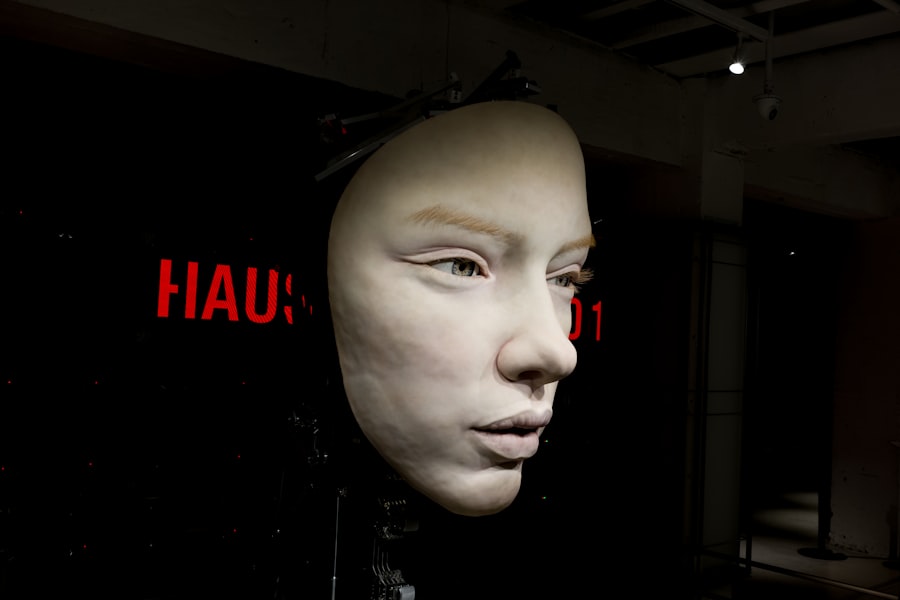
To understand the mechanics behind deepfake technology, we must first explore the algorithms that power it.
This sophisticated framework consists of two neural networks: a generator and a discriminator. The generator creates fake images or videos, while the discriminator evaluates them against real data to determine their authenticity. Through this adversarial process, both networks improve over time, resulting in increasingly convincing outputs.
The training process for these algorithms involves feeding them vast datasets of images and videos featuring the target individual. By analyzing these inputs, the generator learns to replicate facial features, expressions, and movements with remarkable accuracy. As we observe this process, it becomes evident that deepfake technology relies heavily on data quality and quantity; the more diverse and comprehensive the dataset, the more realistic the final product will be.
This intricate interplay between data and algorithmic learning is what enables deepfakes to achieve such a high level of realism.
The Importance of Detecting Deepfakes
| Metrics | Data |
|---|---|
| Number of deepfake videos online | Thousands |
| Percentage of people who believe they can spot a deepfake | Less than 50% |
| Impact of deepfakes on misinformation | High |
| Number of deepfake detection tools available | Dozens |
| Cost of deepfake detection technology | Varies |
As deepfake technology continues to evolve, the importance of detecting these fabricated media becomes increasingly critical. The potential for misuse is vast, ranging from personal defamation to large-scale misinformation campaigns that could sway elections or incite violence. In a world where visual evidence is often taken at face value, our ability to discern between genuine content and deepfakes is essential for maintaining trust in media and communication.
Moreover, the implications of undetected deepfakes extend beyond individual cases; they can erode public confidence in institutions and media outlets. When people cannot distinguish between real and fake content, they may become skeptical of all media sources, leading to a breakdown in informed discourse. As we navigate this complex landscape, developing robust detection methods is not just a technical challenge but a societal imperative that requires collaboration across disciplines.
Common Techniques for Detecting Deepfakes
In response to the growing prevalence of deepfakes, researchers and technologists have developed various techniques for detection. One common approach involves analyzing inconsistencies in facial movements or expressions that may not align with natural human behavior. For instance, subtle discrepancies in eye movement or blinking patterns can serve as telltale signs of manipulation.
By employing machine learning algorithms trained on both real and deepfake datasets, we can identify these anomalies with increasing accuracy. Another technique focuses on examining audio-visual synchronization. Deepfake videos often struggle to perfectly align lip movements with spoken words, leading to noticeable mismatches that can be detected through advanced analysis.
Additionally, researchers are exploring the use of digital forensics tools that analyze pixel-level inconsistencies or compression artifacts that may indicate tampering. As we continue to refine these detection methods, it becomes clear that a multi-faceted approach will be necessary to keep pace with the evolving capabilities of deepfake technology.
Advancements in Deepfake Detection Algorithms
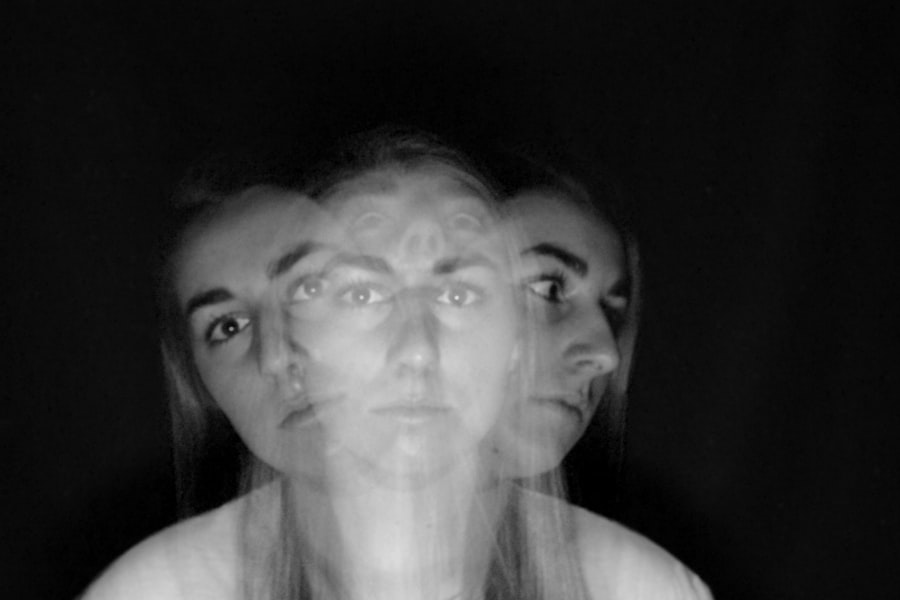
Advancements in Detection Algorithms
For example, some algorithms now utilize convolutional neural networks (CNNs) that can automatically learn features indicative of deepfakes without requiring extensive manual feature engineering.
Collaborative Efforts Driving Innovation
Moreover, collaborative efforts among tech companies, academic institutions, and governmental organizations are fostering innovation in this space. Initiatives such as competitions and shared datasets are driving progress by encouraging researchers to develop new detection algorithms that can be benchmarked against one another.
A Proactive Approach to Mitigating Risks
As we witness these advancements unfold, it becomes evident that a proactive approach to detection will be crucial in mitigating the risks associated with deepfake technology.
Challenges in Detecting Deepfakes
Despite significant progress in developing detection methods, challenges remain that complicate our efforts to combat deepfakes effectively. One major hurdle is the rapid pace at which deepfake technology is evolving; as detection algorithms improve, so too do the techniques used to create more convincing fakes. This ongoing arms race between creators and detectors necessitates continuous innovation and adaptation on both sides.
Additionally, there are inherent limitations in current detection methods that can lead to false positives or negatives. For instance, certain benign alterations in video content may be misclassified as deepfakes due to their unusual characteristics. Furthermore, as deepfake creators become more adept at mimicking human behavior and expressions, even state-of-the-art detection systems may struggle to keep up with emerging trends.
As we confront these challenges, it is clear that a comprehensive strategy involving education, technological innovation, and public awareness will be essential for effectively addressing the deepfake dilemma.
Future of Deepfake Detection Technology
Looking ahead, the future of deepfake detection technology holds both promise and uncertainty. As artificial intelligence continues to advance at an unprecedented rate, we can expect further improvements in detection algorithms that leverage cutting-edge techniques such as transfer learning and ensemble methods. These innovations may enhance our ability to identify even the most sophisticated deepfakes with greater accuracy and speed.
Such initiatives could foster greater transparency in media consumption and empower individuals to make informed decisions about the content they encounter online. Ultimately, as we navigate this complex landscape shaped by deepfake technology, our collective responsibility will be to ensure that we harness its potential for positive applications while safeguarding against its misuse.
By prioritizing research in detection methods and fostering public awareness about the implications of deepfakes, we can work towards a future where authenticity remains a cornerstone of our digital interactions.
There have been significant advancements in technology to combat the rise of deepfake videos, with researchers developing sophisticated algorithms to detect and prevent their spread. One related article discusses how Apple recently released a security update to fix a zero-day vulnerability in Macs and Apple Watches, highlighting the importance of staying ahead of potential security threats. To learn more about this update, you can read the article here.
FAQs
What are deepfake detection algorithms?
Deepfake detection algorithms are computer programs designed to identify and flag media content, such as images and videos, that have been manipulated using deep learning techniques to create fake or misleading representations of reality.
How do deepfake detection algorithms work?
Deepfake detection algorithms work by analyzing various features of the media content, such as facial expressions, eye movements, and audio patterns, to identify inconsistencies and anomalies that may indicate the presence of deepfake manipulation.
What are the challenges in developing deepfake detection algorithms?
Challenges in developing deepfake detection algorithms include the rapid advancement of deepfake technology, the need for large and diverse datasets for training, and the ability to detect increasingly sophisticated and realistic deepfake content.
What are some common techniques used in deepfake detection algorithms?
Common techniques used in deepfake detection algorithms include analyzing facial and body movements, examining audio and visual artifacts, and leveraging machine learning and artificial intelligence to identify patterns and anomalies indicative of deepfake manipulation.
What are the potential applications of deepfake detection algorithms?
Potential applications of deepfake detection algorithms include safeguarding against misinformation and fake news, protecting individuals and organizations from reputational harm, and ensuring the integrity of media content in various domains such as journalism, entertainment, and law enforcement.


