

The advent of artificial intelligence (AI) has ushered in a new era for various industries, with smart manufacturing standing out as a particularly transformative sector. Smart manufacturing refers to the integration of advanced technologies, including AI, the Internet of Things (IoT), and big data analytics, to create more efficient, flexible, and responsive production systems. This paradigm shift is not merely about automating processes; it encompasses a holistic approach to manufacturing that leverages data-driven insights to enhance decision-making and operational efficiency.
As industries grapple with increasing global competition and the demand for customised products, the role of AI becomes increasingly pivotal. By harnessing AI, manufacturers can optimise their operations, reduce waste, and improve product quality. The integration of AI into manufacturing processes is not just a trend; it represents a fundamental change in how products are designed, produced, and delivered.
This article will explore the multifaceted role of AI in smart manufacturing, examining its impact on production processes, implementation strategies, benefits, challenges, and future prospects. Have you read the latest blog post on artificial intelligence?
Summary
- AI is revolutionizing smart manufacturing by enabling machines to learn from data and make decisions without human intervention.
- AI plays a crucial role in optimizing production processes by analysing data in real-time, predicting equipment failures, and improving overall efficiency.
- Implementing AI technologies in smart manufacturing involves integrating sensors, data analytics, and machine learning algorithms into existing production systems.
- The benefits of AI in smart manufacturing include increased productivity, reduced downtime, improved quality control, and cost savings.
- Challenges and limitations of AI in smart manufacturing include data security concerns, the need for skilled personnel, and the potential for job displacement.
The Role of AI in Optimizing Production Processes
Real-Time Data Analysis
AI plays a vital role in optimising production processes by enabling manufacturers to analyse vast amounts of data in real-time. Through machine learning algorithms and predictive analytics, AI can identify patterns and trends that human operators might overlook. For instance, AI systems can monitor equipment performance and predict maintenance needs before failures occur, thereby minimising downtime and extending the lifespan of machinery.
Enhancing Operational Efficiency
This predictive maintenance capability not only enhances operational efficiency but also reduces costs associated with unexpected breakdowns. Moreover, AI facilitates the optimisation of supply chain management by providing insights into inventory levels, demand forecasting, and supplier performance. By analysing historical data and market trends, AI can help manufacturers make informed decisions about when to reorder materials or adjust production schedules.
Agility and Adaptability in a Fast-Paced Market
This level of responsiveness is essential in today’s fast-paced market environment, where consumer preferences can shift rapidly. Consequently, AI empowers manufacturers to be more agile and adaptive, ensuring that they can meet customer demands without overproducing or incurring excess inventory costs.
Implementing AI Technologies in Smart Manufacturing

The successful implementation of AI technologies in smart manufacturing requires a strategic approach that encompasses several key steps. First and foremost, manufacturers must assess their current technological infrastructure and identify areas where AI can add value. This assessment often involves evaluating existing data collection methods, software systems, and hardware capabilities.
A clear understanding of these elements is essential for determining how best to integrate AI solutions into existing workflows. Once potential applications for AI have been identified, manufacturers must invest in the necessary technology and talent. This may involve acquiring advanced software platforms that support machine learning and data analytics or hiring skilled personnel who can develop and manage AI systems.
Additionally, training existing employees to work alongside AI technologies is crucial for fostering a culture of innovation and collaboration. By equipping staff with the skills needed to leverage AI effectively, manufacturers can ensure a smoother transition to smart manufacturing practices.
Benefits of AI in Smart Manufacturing
| Benefits of AI in Smart Manufacturing |
|---|
| Improved efficiency in production processes |
| Enhanced predictive maintenance leading to reduced downtime |
| Optimised supply chain management |
| Increased product quality and consistency |
| Real-time monitoring and decision-making |
| Cost savings through waste reduction and energy efficiency |
The benefits of integrating AI into smart manufacturing are manifold and can significantly enhance overall productivity and competitiveness. One of the most notable advantages is the ability to improve product quality through enhanced monitoring and control processes. AI systems can analyse data from various stages of production to detect anomalies or deviations from quality standards in real-time.
This capability allows manufacturers to address issues promptly, reducing the likelihood of defective products reaching the market. In addition to quality improvements, AI contributes to cost savings by streamlining operations and reducing waste. For example, AI-driven analytics can optimise resource allocation by identifying inefficiencies in production lines or supply chains.
By minimising excess material usage and energy consumption, manufacturers can lower operational costs while also contributing to sustainability goals. Furthermore, the insights generated by AI can lead to more informed strategic decisions regarding product development and market positioning, ultimately driving profitability.
Challenges and Limitations of AI in Smart Manufacturing
Despite its numerous advantages, the integration of AI into smart manufacturing is not without challenges. One significant hurdle is the initial investment required for implementing advanced technologies. Many manufacturers may find it difficult to allocate sufficient resources for the acquisition of AI tools and the necessary infrastructure upgrades.
This financial barrier can be particularly daunting for small to medium-sized enterprises (SMEs) that may lack the capital to invest in such transformative technologies. Another challenge lies in data management and security. The effectiveness of AI systems relies heavily on the availability of high-quality data; however, many manufacturers struggle with data silos and inconsistent data formats across different departments.
Additionally, as more devices become interconnected through IoT technologies, concerns about cybersecurity become increasingly pertinent. Manufacturers must ensure that their systems are secure from potential cyber threats while also complying with data protection regulations.
Case Studies of Successful AI Integration in Smart Manufacturing
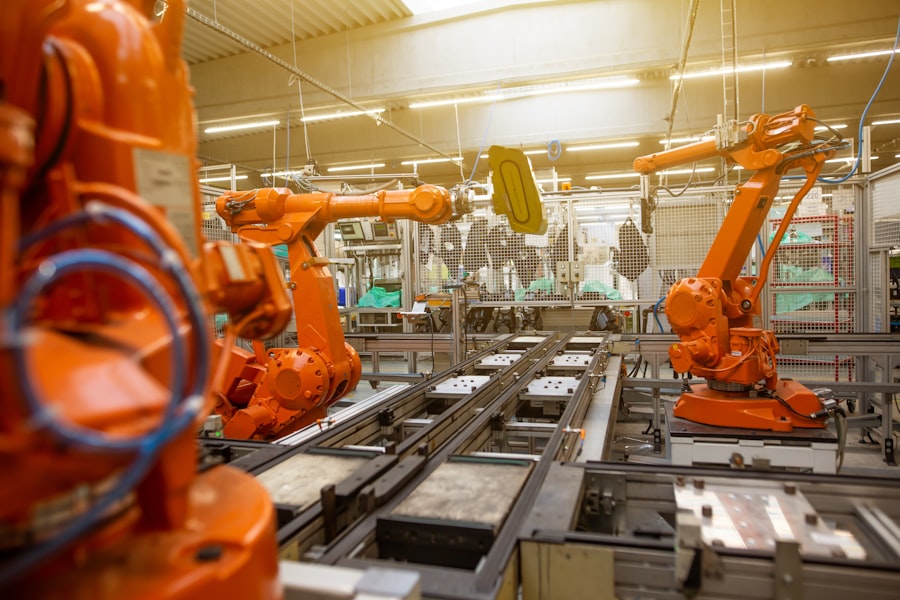
Siemens: A Notable Case Study
One notable case is Siemens, which has implemented AI-driven predictive maintenance across its manufacturing facilities. By utilising machine learning algorithms to analyse equipment data, Siemens has significantly reduced unplanned downtime and improved overall equipment effectiveness (OEE).
Cost Savings and Enhanced Productivity
This proactive approach has not only enhanced productivity but also resulted in substantial cost savings.
General Electric: Optimising Supply Chain Operations
Another compelling example is General Electric (GE), which has leveraged AI to optimise its supply chain operations. By employing advanced analytics to forecast demand and manage inventory levels more effectively, GE has improved its responsiveness to market changes while minimising excess stock. This integration of AI has enabled GE to streamline its operations and enhance customer satisfaction through timely deliveries and high-quality products.
The Future of AI in Smart Manufacturing
Looking ahead, the future of AI in smart manufacturing appears promising as technological advancements continue to evolve. One key trend is the increasing adoption of collaborative robots (cobots) that work alongside human operators on the production floor. These robots are equipped with AI capabilities that allow them to learn from their interactions with humans and adapt their behaviours accordingly.
This synergy between humans and machines is expected to enhance productivity while also creating safer working environments. Moreover, as AI technologies become more sophisticated, we can anticipate greater levels of automation across various manufacturing processes. The rise of autonomous systems capable of making real-time decisions based on data analysis will further revolutionise production methodologies.
Additionally, advancements in natural language processing (NLP) may enable more intuitive human-machine interactions, allowing operators to communicate with machines using everyday language rather than complex programming commands.
The Impact of AI on the Future of Production Processes
In conclusion, the integration of artificial intelligence into smart manufacturing represents a significant leap forward in production processes. By optimising operations through data-driven insights, enhancing product quality, and streamlining supply chains, AI is reshaping the landscape of manufacturing as we know it. While challenges remain regarding implementation costs and data management, the potential benefits far outweigh these obstacles for many organisations.
As we move towards an increasingly automated future, it is clear that AI will play a central role in driving innovation within the manufacturing sector. Companies that embrace these technologies will not only improve their operational efficiency but also position themselves competitively in a rapidly evolving marketplace. Ultimately, the impact of AI on smart manufacturing will be profound, paving the way for more sustainable practices and greater responsiveness to consumer demands in the years to come.
AI in Smart Manufacturing: Revolutionizing Production Processes is a fascinating topic that is shaping the future of manufacturing industries. In a related article, Xiaomi Poco X4 GT Possible Specifications Leaked, the use of advanced technology in the development of smartphones is highlighted. Just as AI is revolutionizing production processes, it is also playing a crucial role in the design and manufacturing of cutting-edge smartphones like the Poco X4 GT. This article showcases how AI is transforming various industries and pushing the boundaries of innovation.
FAQs
What is AI in smart manufacturing?
AI in smart manufacturing refers to the use of artificial intelligence (AI) technologies to optimize and automate production processes in manufacturing facilities. This includes using AI for predictive maintenance, quality control, supply chain management, and overall process optimization.
How is AI revolutionizing production processes in smart manufacturing?
AI is revolutionizing production processes in smart manufacturing by enabling real-time data analysis, predictive maintenance, and autonomous decision-making. This results in improved efficiency, reduced downtime, and higher product quality.
What are some examples of AI applications in smart manufacturing?
Some examples of AI applications in smart manufacturing include predictive maintenance to anticipate equipment failures, machine learning algorithms for quality control, autonomous robots for material handling, and AI-powered supply chain management for demand forecasting and inventory optimization.
What are the benefits of using AI in smart manufacturing?
The benefits of using AI in smart manufacturing include increased productivity, reduced operational costs, improved product quality, enhanced safety, and the ability to adapt to changing market demands more effectively.
What are the challenges of implementing AI in smart manufacturing?
Challenges of implementing AI in smart manufacturing include the initial investment in technology and infrastructure, data security and privacy concerns, the need for skilled personnel to manage AI systems, and the potential resistance to change from existing workforce.


 has ushered in a new era for various industries, with smart manufacturing standing out as a particularly..)