
Artificial Intelligence (AI) has emerged as a transformative force in various sectors, and global trade is no exception. The integration of AI technologies into trade practices is reshaping how businesses operate, facilitating smoother transactions, and enhancing decision-making processes. As the world becomes increasingly interconnected, the need for efficient and effective trade mechanisms has never been more critical.
AI offers innovative solutions that can streamline operations, reduce costs, and improve overall competitiveness in the global marketplace. The advent of AI in global trade is not merely a trend; it represents a fundamental shift in how goods and services are exchanged across borders. From predictive analytics that forecast demand to automated systems that manage inventory, AI is enabling companies to respond more swiftly to market changes.
This article will explore the multifaceted role of AI in global trade, examining its impact on efficiency, supply chain management, trade finance, and the ethical considerations that accompany its implementation. Have you read the latest blog post on artificial intelligence?
Summary
- AI is revolutionizing global trade by improving efficiency and productivity.
- AI is transforming supply chain management and logistics through advanced data analysis and predictive capabilities.
- AI is reshaping trade finance and risk management by providing more accurate and timely insights.
- The challenges of AI in global trade include data privacy concerns and the need for workforce upskilling.
- Embracing the potential of AI in global trade requires addressing ethical and legal implications while staying ahead of future trends and predictions.
AI’s Role in Improving Efficiency and Productivity in Global Trade
AI technologies are instrumental in enhancing efficiency and productivity within global trade operations. By automating routine tasks, businesses can allocate resources more effectively and focus on strategic initiatives that drive growth. For instance, AI-powered chatbots can handle customer inquiries around the clock, providing instant responses and freeing up human agents to tackle more complex issues.
This not only improves customer satisfaction but also optimises workforce utilisation. Moreover, AI algorithms can analyse vast amounts of data to identify patterns and trends that may not be immediately apparent to human analysts. This capability allows companies to make informed decisions regarding inventory management, pricing strategies, and market entry.
By leveraging AI for data analysis, businesses can reduce lead times and enhance their responsiveness to changing market conditions, ultimately leading to increased productivity and profitability.
The Impact of AI on Supply Chain Management and Logistics
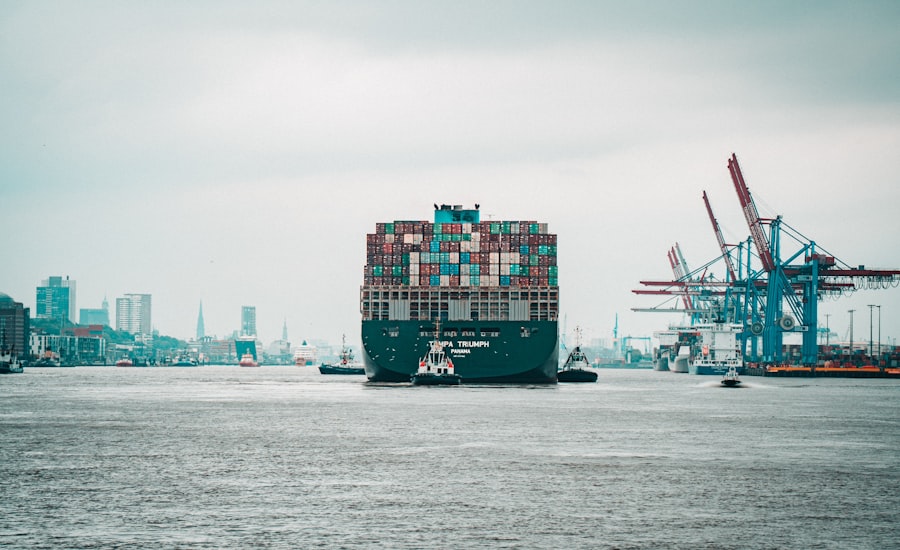
The integration of AI into supply chain management and logistics has revolutionised how goods are transported and delivered. AI systems can optimise routing for shipping and delivery, taking into account real-time traffic data, weather conditions, and other variables that may affect transit times. This level of optimisation not only reduces costs but also enhances the reliability of delivery schedules, which is crucial for maintaining customer satisfaction.
Furthermore, AI can improve inventory management by predicting demand fluctuations with remarkable accuracy. Machine learning algorithms analyse historical sales data and external factors to forecast future demand, enabling businesses to adjust their inventory levels accordingly. This proactive approach minimises the risk of overstocking or stockouts, ensuring that products are available when customers need them.
As a result, companies can maintain a leaner inventory while still meeting customer expectations.
AI’s Influence on Trade Finance and Risk Management
| Metrics | Trade Finance | Risk Management |
|---|---|---|
| Efficiency | Reduction in processing time for trade transactions | Improved accuracy in risk assessment |
| Cost Reduction | Lower operational costs through automation | Minimised potential losses through predictive analytics |
| Compliance | Enhanced compliance with regulatory requirements | Identification of potential compliance risks |
| Decision Making | Improved decision making through data analysis | Real-time monitoring and decision support |
In the realm of trade finance, AI is playing a pivotal role in streamlining processes and mitigating risks. Traditional trade finance methods often involve extensive paperwork and lengthy approval processes, which can delay transactions and increase costs. AI technologies can automate these processes by digitising documents and using natural language processing to extract relevant information quickly.
This not only accelerates transaction times but also reduces the likelihood of human error. Additionally, AI enhances risk management by providing real-time insights into market conditions and potential disruptions. Machine learning models can analyse various risk factors, such as geopolitical events or economic indicators, to assess their potential impact on trade activities.
By identifying risks early, businesses can implement strategies to mitigate them, ensuring greater stability in their operations. This proactive approach to risk management is essential in an increasingly volatile global trade environment.
The Challenges and Opportunities of AI in Global Trade
While the benefits of AI in global trade are substantial, several challenges must be addressed to fully realise its potential. One significant concern is the digital divide between developed and developing nations. Many emerging economies may lack the infrastructure or resources necessary to implement advanced AI technologies effectively.
This disparity could exacerbate existing inequalities in global trade, as businesses in developed countries gain a competitive edge through AI adoption. Conversely, the challenges presented by AI also create opportunities for innovation and collaboration. Companies that invest in AI technologies can differentiate themselves in the marketplace by offering enhanced services and improved customer experiences.
Furthermore, partnerships between technology providers and businesses can facilitate knowledge sharing and capacity building in regions where AI adoption is lagging. By fostering collaboration across borders, stakeholders can work towards creating a more inclusive global trade environment.
The Ethical and Legal Implications of AI in Global Trade
The rise of AI in global trade raises important ethical and legal considerations that must be carefully navigated. One primary concern is data privacy; as businesses increasingly rely on data-driven insights, they must ensure that they handle customer information responsibly and comply with relevant regulations. The use of AI algorithms also raises questions about transparency and accountability—companies must be able to explain how decisions are made by these systems to maintain trust with stakeholders.
Moreover, the potential for job displacement due to automation is a pressing ethical issue. While AI can enhance productivity, it may also lead to significant changes in the workforce landscape. Businesses must consider how they will support employees whose roles may be affected by automation, whether through retraining programmes or other forms of assistance.
Balancing technological advancement with social responsibility will be crucial as companies navigate the evolving landscape of global trade.
The Future of AI in Global Trade: Predictions and Trends
Looking ahead, the future of AI in global trade appears promising yet complex. As technology continues to evolve, we can expect further advancements in machine learning algorithms and data analytics capabilities. These developments will likely lead to even greater efficiencies in supply chain management, logistics, and trade finance processes.
Additionally, the increasing availability of big data will enable businesses to make more informed decisions based on comprehensive insights. Another trend to watch is the growing emphasis on sustainability within global trade practices. As consumers become more environmentally conscious, companies will need to leverage AI to optimise their operations for sustainability.
This could involve using AI to minimise waste in supply chains or enhance energy efficiency in logistics operations. The intersection of AI and sustainability presents an exciting opportunity for businesses to innovate while addressing pressing global challenges.
Embracing the Potential of AI in Global Trade
In conclusion, the integration of artificial intelligence into global trade holds immense potential for enhancing efficiency, productivity, and risk management while also presenting significant challenges that must be addressed thoughtfully. As businesses navigate this transformative landscape, they must remain vigilant about ethical considerations and strive for inclusivity in their adoption of new technologies. By embracing the opportunities presented by AI while addressing its challenges head-on, stakeholders can work towards a more efficient, equitable, and sustainable future for global trade.
The journey towards fully harnessing the power of AI in global trade is ongoing; however, it is clear that those who adapt to these changes will be better positioned to thrive in an increasingly competitive environment. As we look forward to the future of global commerce, it is imperative that businesses remain proactive in exploring innovative solutions that leverage AI’s capabilities while fostering collaboration across borders to ensure a prosperous trading landscape for all participants involved.
The impact of artificial intelligence on global trade has been a topic of much discussion in recent years. According to a recent article on Twitter developing a tool for keyword alerts, AI is revolutionising the way businesses operate and interact with customers. This technology has the potential to streamline processes, improve efficiency, and ultimately boost international trade. As businesses continue to adopt AI solutions, it will be interesting to see how this impacts the global economy and trade relations between countries.
FAQs
What is AI?
AI stands for artificial intelligence, which refers to the simulation of human intelligence in machines that are programmed to think and learn like humans.
How is AI impacting global trade?
AI is impacting global trade in various ways, including improving supply chain efficiency, enabling predictive analytics for demand forecasting, and facilitating automated customer service and sales processes.
What are the benefits of AI in global trade?
The benefits of AI in global trade include increased productivity, cost savings, improved decision-making, enhanced customer experiences, and the ability to handle large volumes of data efficiently.
What are the potential challenges of AI in global trade?
Potential challenges of AI in global trade include job displacement due to automation, data privacy and security concerns, and the need for regulations and ethical guidelines to govern AI use in trade.
How is AI being used in supply chain management?
AI is being used in supply chain management to optimize inventory levels, predict demand, improve logistics and transportation efficiency, and enhance overall supply chain visibility and control.
What role does AI play in trade finance?
AI plays a role in trade finance by automating processes such as credit scoring, risk assessment, fraud detection, and trade document processing, leading to faster and more efficient trade finance operations.


 has emerged as a transformative force in various sectors, and global trade is no exception. The integration of AI..)