

Artificial Intelligence (AI) has emerged as a transformative force across various sectors, and transportation is no exception. The integration of AI technologies into transportation systems is reshaping how we move people and goods, enhancing efficiency, safety, and sustainability. From autonomous vehicles to smart traffic management systems, AI is revolutionising the landscape of transportation, promising a future that is not only more connected but also more intelligent.
As urbanisation continues to rise and the demand for efficient transport solutions grows, the role of AI in this sector becomes increasingly critical. The convergence of AI with transportation is driven by several factors, including advancements in machine learning, data analytics, and sensor technologies. These innovations enable vehicles to process vast amounts of data in real-time, allowing for improved decision-making and operational efficiency.
As cities grapple with congestion, pollution, and the need for sustainable transport solutions, AI offers a pathway to address these challenges. This article will explore the current state of autonomous vehicles, the impact of AI on public transportation, the future of delivery services, traffic management, sustainability, ethical considerations, and the challenges and opportunities that lie ahead. Have you read the latest blog post on artificial intelligence?
Summary
- AI is revolutionising the transportation industry by enabling autonomous vehicles and improving traffic management.
- Current autonomous vehicles are still in the testing phase and face challenges such as safety concerns and regulatory issues.
- AI is transforming public transportation by enhancing efficiency, safety, and accessibility for passengers.
- The future of delivery services is being shaped by AI, with advancements in route optimisation and last-mile delivery solutions.
- AI is playing a crucial role in traffic management by analysing data to improve traffic flow and reduce congestion.
The Current State of Autonomous Vehicles
Autonomous vehicles (AVs) represent one of the most significant advancements in transportation technology, with the potential to redefine personal and commercial mobility. Currently, several companies are actively testing and deploying AVs on public roads, utilising a combination of sensors, cameras, and AI algorithms to navigate complex environments. Major players in the automotive industry, such as Tesla, Waymo, and traditional manufacturers like Ford and General Motors, are investing heavily in research and development to bring fully autonomous vehicles to market.
Despite the promising advancements, the current state of autonomous vehicles is characterised by varying levels of automation. The Society of Automotive Engineers (SAE) defines six levels of automation, ranging from Level 0 (no automation) to Level 5 (full automation). Most commercially available vehicles today fall within Levels 2 and 3, where drivers are required to remain engaged while the vehicle handles certain driving tasks.
Full autonomy remains a goal for many companies but is still hindered by technical challenges, regulatory hurdles, and public acceptance issues.
The Impact of AI on Public Transportation

AI is significantly enhancing public transportation systems by improving operational efficiency and passenger experience. Through predictive analytics and real-time data processing, transit agencies can optimise routes and schedules based on demand patterns. For instance, AI algorithms can analyse historical ridership data alongside real-time information to adjust bus frequencies or train services dynamically.
This responsiveness not only improves service reliability but also enhances user satisfaction by reducing wait times. Moreover, AI-powered applications are transforming how passengers interact with public transport systems. Mobile apps that utilise AI can provide users with personalised travel recommendations, real-time updates on service disruptions, and alternative route suggestions.
These innovations encourage greater use of public transport by making it more accessible and user-friendly. Additionally, AI can assist in monitoring vehicle conditions and maintenance needs, ensuring that fleets operate safely and efficiently while minimising downtime.
AI and the Future of Delivery Services
| Metrics | Data |
|---|---|
| Number of AI-powered delivery robots | 2000 |
| Percentage of delivery companies using AI for route optimization | 75% |
| Reduction in delivery time due to AI implementation | 30% |
| Percentage of customers satisfied with AI-driven delivery services | 85% |
The rise of e-commerce has led to an increased demand for efficient delivery services, prompting companies to explore AI-driven solutions. Autonomous delivery vehicles and drones are at the forefront of this transformation, promising faster and more cost-effective delivery options. Companies like Amazon and Google are investing in drone technology that leverages AI for navigation and obstacle avoidance, enabling them to deliver packages directly to customers’ doorsteps.
Furthermore, AI is enhancing logistics operations by optimising supply chain management. Machine learning algorithms can analyse vast datasets to predict demand fluctuations, streamline inventory management, and improve route planning for delivery vehicles. This level of optimisation not only reduces operational costs but also minimises environmental impact by ensuring that delivery routes are as efficient as possible.
As these technologies continue to evolve, the future of delivery services is likely to be characterised by increased automation and enhanced customer experiences.
The Role of AI in Traffic Management
Traffic congestion is a persistent issue in urban areas worldwide, leading to increased travel times and environmental pollution. AI technologies are being deployed to address these challenges through intelligent traffic management systems that optimise traffic flow and reduce congestion. By analysing real-time data from traffic cameras, sensors, and GPS devices, AI can make informed decisions about traffic signal timings and routing.
For example, adaptive traffic signal control systems use AI algorithms to adjust signal timings based on current traffic conditions rather than relying on fixed schedules. This dynamic approach can significantly reduce waiting times at intersections and improve overall traffic flow. Additionally, AI can facilitate better communication between vehicles and infrastructure through Vehicle-to-Everything (V2X) technology, allowing for coordinated responses to changing traffic conditions.
As cities continue to grow, the implementation of AI in traffic management will be crucial for creating more efficient urban transport networks.
AI and Sustainable Transportation
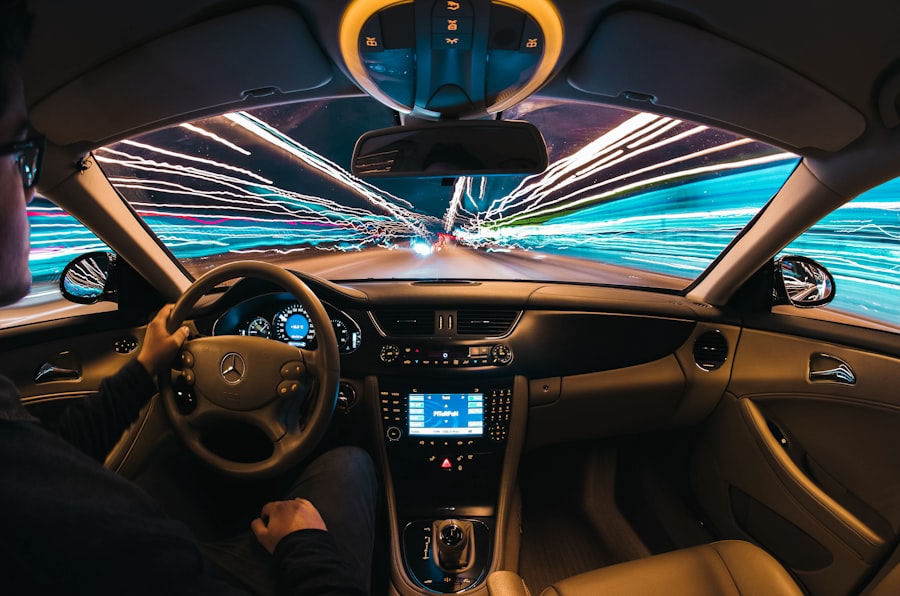
Sustainability is a pressing concern in transportation as cities strive to reduce their carbon footprints and promote greener alternatives. AI plays a pivotal role in advancing sustainable transportation solutions by optimising energy consumption and promoting the use of alternative fuels. For instance, electric vehicles (EVs) equipped with AI can manage battery usage more effectively by analysing driving patterns and adjusting performance accordingly.
Moreover, AI can facilitate the development of smart mobility solutions that encourage shared transportation options such as carpooling or ride-sharing services. By analysing user preferences and travel patterns, AI can match passengers with similar routes, thereby reducing the number of vehicles on the road and lowering emissions. Additionally, AI-driven public transport systems can enhance the efficiency of electric buses or trams by optimising their routes based on real-time demand data.
The Ethical and Legal Implications of AI in Transportation
As AI continues to permeate the transportation sector, it raises important ethical and legal questions that must be addressed. One significant concern is the accountability for accidents involving autonomous vehicles. In cases where an AV is involved in a collision, determining liability can be complex—should it rest with the manufacturer, software developer, or vehicle owner?
This ambiguity necessitates a reevaluation of existing legal frameworks to accommodate the unique challenges posed by autonomous technology. Furthermore, there are ethical considerations surrounding data privacy and security. The extensive data collection required for AI systems raises concerns about how personal information is used and protected.
Ensuring that data is handled responsibly while still enabling innovation is a delicate balance that policymakers must navigate. Additionally, there are broader societal implications regarding job displacement in sectors such as trucking or taxi services due to increased automation. Addressing these ethical dilemmas will be crucial for fostering public trust in AI technologies within transportation.
The Challenges and Opportunities for AI in the Future of Transportation
The future of AI in transportation presents both challenges and opportunities that stakeholders must consider carefully. One significant challenge is the need for robust infrastructure capable of supporting advanced technologies such as 5G networks for real-time data transmission. Upgrading existing infrastructure requires substantial investment and collaboration between public and private sectors.
On the other hand, the opportunities presented by AI are vast. As technology continues to evolve, there is potential for enhanced safety measures through predictive analytics that can identify hazardous conditions before they lead to accidents. Additionally, integrating AI with other emerging technologies such as blockchain could improve transparency in supply chains or enhance security in vehicle communications.
In conclusion, while there are hurdles to overcome in implementing AI within transportation systems, the potential benefits are substantial. By embracing innovation responsibly and addressing ethical concerns proactively, society can harness the power of AI to create a safer, more efficient, and sustainable transportation future.
In a recent article discussing the future of transportation and the role of AI in autonomous vehicles, it is clear that technology is rapidly advancing in this sector. However, it is important to consider the infrastructure needed to support these advancements. For example, setting up Ruby on Rails for a CentOS/Fedora VPS can provide the necessary framework for efficient communication between autonomous vehicles and their surroundings. This related article on setting up Ruby on Rails for a CentOS/Fedora VPS highlights the importance of a solid technological foundation for the future of transportation.
FAQs
What is AI in the context of transportation?
AI, or artificial intelligence, refers to the simulation of human intelligence processes by machines, particularly computer systems. In the context of transportation, AI is used to develop autonomous vehicles, traffic management systems, and other technologies to improve the efficiency and safety of transportation.
What are autonomous vehicles?
Autonomous vehicles, also known as self-driving cars, are vehicles that can operate without human intervention. They use a combination of sensors, cameras, and AI algorithms to navigate and make decisions on the road.
How does AI impact the future of transportation?
AI is expected to revolutionize the future of transportation by enabling the widespread adoption of autonomous vehicles, improving traffic management systems, and enhancing the overall efficiency and safety of transportation networks.
What are the potential benefits of AI in transportation?
The potential benefits of AI in transportation include reduced traffic congestion, improved road safety, lower emissions, increased mobility for people with disabilities, and enhanced overall efficiency of transportation systems.
What are some challenges and concerns related to AI in transportation?
Challenges and concerns related to AI in transportation include issues of cybersecurity, ethical considerations surrounding decision-making algorithms, potential job displacement for drivers, and the need for updated regulations and infrastructure to support AI technologies.


 has emerged as a transformative force across various sectors, and transportation is no exception. The integration of AI..)